



-
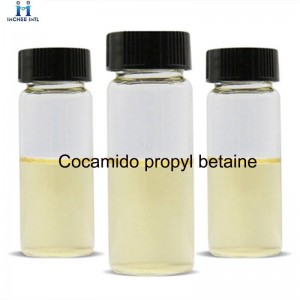
Manufacturer Good Price CAB-35 Cocamido propyl betaine CAS: 61789-40-0
Cocamidopropyl betaine (CAPB) is an amphoteric surfactant. The particular behaviour of amphoterics is related to their zwitterionic character; that means: both anionic and cationic structures are found in one molecule.
Chemical Properties:Cocamidopropyl Betaine (CAB) is an organic compound derived from coconut oil and dimethylaminopropylamine. It is a zwitterion, consisting of both a quaternary ammonium cation and a carboxylate. CAB is available as viscous pale yellow solution that is used as a surfactant in personal care products.
Synonyms:NAXAINE C;NAXAINE CO;Lonzaine(R) C;Lonzaine(R) CO;Propanaminium, 3-amino-N-(carboxymethyl)-N,N-dimethyl-, N-coco acyl deriv;RALUFON 414;1-PropanaMiniuM, 3-aMino-N-(carboxyMethyl)-N,N-diMethyl;1-Propanaminium, 3-amino-N-(carboxymethyl)-N,N-dimethyl-, N-coco acyl derivs., hydroxides, inner salts
CAS: 61789-40-0
EC No.: 263-058-8
-
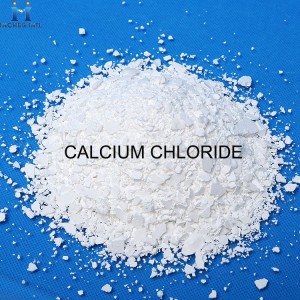
Manufacturer Good Price CALCIUM CHLORIDE CAS: 10043-52-4
Calcium Chloride (CaCl2) is a water soluble ionic crystal with a high enthalpy change of solution. It is majorly derived from limestone and is a by-product of the Solvay process. It is an anhydrous salt that has a hygroscopic nature and can be used as a desiccant.
Chemical Properties:Calcium chloride, CaC12, is colorless deliquescent solid that is soluble in water and ethanol. It is formed from the reaction of calcium carbonate and hydrochloric acid or calcium hydroxide and ammonium chloride. It is used in medicine, as an antifreeze, and as a coagulant.
Synonym:PELADOW(R) SNOW AND ICE MELT;Calcium chloride,aqueous solution;Calcium chloride,medicinal;Additive Screening Solution 21/Fluka kit no 78374, Calcium chloride solution;calcium chloride anhydrus for technical;calcium chloride anhydrous for food;CACL2 (CALCIUM CHLORIDE);CalciuM chloride, 96%, for biocheMistry, anhydrous
CAS: 10043-52-4
EC No.:233-140-8
-
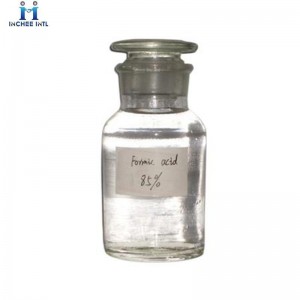
Manufacturer Good Price FORMIC ACID 85% CAS: 64-18-6
Formic acid is a clear, colorless liquid with a pungent odor. Formic acid was first isolated from certain ants and was named after the Latin formica, meaning ant. It is made by the action of sulfuric acid on sodium formate, which is produced from carbon monoxide and sodium hydroxide. It is also produced as a by-product in the manufacture of other chemicals such as acetic acid.
It can be anticipated that use of formic acid will continuously increase as it replaces inorganic acids and has a potential role in new energy technology. Formic acid toxicity is of a special interest as the acid is the toxic metabolite of methanol.Properties:FORMIC ACID is a colorless liquid with a pungent odor. It is a stable corrosive, combustible, and hygroscopic chemical substance. It is incompatible with H2SO4, strong caustics, furfuryl alcohol, hydrogen peroxide, strong oxidisers, and bases and reacts with strong explosion on contact with oxidising agents.
Due to the −CHO group, Formic acid imparts some of the character of an aldehyde. It can form salt and ester; can react with amine to form amide and to form ester by addition reaction with unsaturated hydrocarbon addition. It can reduce the silver ammonia solution to produce a silver mirror, and make the potassium permanganate solution fade, which can be used for the qualitative identification of formic acid.
As a carboxylic acid, formic acid shares most of the same chemical properties in reacting with alkalis to form water soluble formate. But formic acid is not a typical carboxylic acid as it can react with alkenes to form formate esters.Synonyms:Acide formique;acideformique;acideformique(french);Acido formico;acidoformico;Add-F;Kwas metaniowy;kwasmetaniowy
CAS: 64-18-6
EC No.: 200-579-1
-
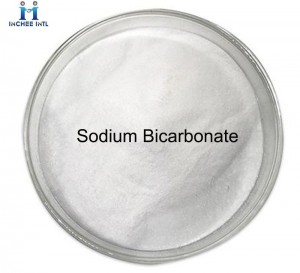
Manufacturer Good Price Sodium Bicarbonate CAS: 144-55-8
Sodium bicarbonate, which is the compound commonly called baking soda, exists as a white, odorless, crystalline solid. It occurs naturally as the mineral nahcolite, which derives its name from its chemical formula by replacing the “3” in NaHCO3 with the ending “lite.” The world’s main source of nahcolite is the Piceance Creek Basin in western Colorado, which is part of the larger Green River formation. Sodium bicarbonate is extracted using solution mining by pumping hot water through injection wells to dissolve the nahcolite from the Eocene beds where it occurs 1,500 to 2,000 feet below the surface. The dissolved sodium bicarbonate is pumped to the surface where it is treated to recover NaHCO3 from solution. Sodium bicarbonate can also be produced from the trona deposits, which is a source of sodium carbonates (see Sodium Carbonate).
Chemical Properties:Sodium bicarbonate, NaHC03, also known as sodium acid carbonate and baking soda, is a white water-soluble crystalline solid.It has an alkaline taste, loses carbon dioxide at 270°C (518 °F).and is used in food preparation. Sodium bicarbonate also finds use as a medicine,a butter preservative, in ceramics,and to prevent timber mold.
Synonym:Sodium bicarbonate, GR,≥99.8%;Sodium bicarbonate, AR,≥99.8%;Sodium bicarbonate standard solution;Natrium Bicarbonate;SODIUM BICARBONATE PWD;Sodium bicarbonate test solution(ChP);Sodium bicarbonate Manufacturer;TSQN
CAS: 144-55-8
EC No.:205-633-8
-
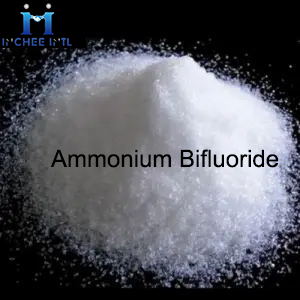
Manufacturer Good Price Ammonium Bifluoride CAS: 1341-49-7
Ammonium hydrogen fluoride is also known as acid ammonium fluoride. The chemical formula NH4F HF. Molecular weight 57.04. White deliquous hexagonal crystal, poisonous. It is easy to delix. The relative density is 1.50, the melting point is 125.6℃, and the refraction is 1.390. Can sublimate, corrosive to glass, hot or hot water will decompose. Soluble in water, slightly soluble in alcohol. Aqueous solution is strongly acidic, can corrode glass Chemicalbook glass, corrosive to skin. Gaseous ammonia was added to 40% of the hydrofluoric acid, then cooled and crystallized.
Preparation method: 1 mole of ammonia water to absorb 2 moles of hydrogen fluoride, and then cooling, concentration, crystallization.
Uses: Used as chemical reagent, earthenware and glass etching, electroplating, brewing industry, fermentation industry preservative and bacterial inhibitor, etc. It is also used in beryllium smelting and ceramic manufacturing.
Chemical Properties:White or colorless transparent rhombic crystal system crystal, the product is flake, slightly sour taste. Slightly soluble in alcohol, easily soluble in cold water, decomposition in hot water. Water is strongly acidic when dissolved.
Synonyms: ETCHINGPOWDER;AMMONIUMBIFLUORIDE;ammoniumfluoridecompwithhydrogenfluoride(1:1);ammoniumhydrofluoride;ammoniumhydrogChemicalbookenbifluoride;fluorureacided’ammonium(french);Ammoniumbifluoride-crystal;AMMoniuMhydrogendifluoride,extrapure,95%1KG
CAS: 1341-49-7
EC No.:215-676-4
-
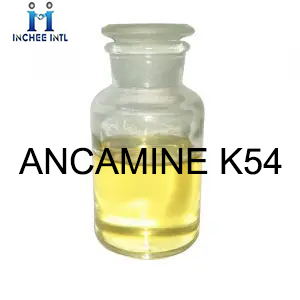
Manufacturer Good Price 2,4,6 TRIS (DIMETHYLAMINOMETHYL) PHENOL- ANCAMINE K54 CAS: 90-72-2
Ancamine K54 (tris-2,4,6-dimethylaminomethyl phenol) is an efficient activator for epoxy resins cured with a wide variety of hardener types including polysulphides, polymercaptans, aliphatic and cycloaliphatic amines, polyamides and amidoamines, dicyandiamide, anhydrides. Applications for Ancamine K54 as a homopolymerisation catalyst for epoxy resin include adhesives, electrical casting and impregnation, and high performance composites.
Chemical Properties:Colorless or light yellow transparent liquid. It’s flammable. When the purity is more than 96% (converted to amine), the moisture is less than 0.10% (Karl-Fischer method), and the hue is 2-7 (Cardinal method), the boiling point is about 250℃, 130-13Chemicalbook5℃ (0.133kPa), the relative density is 0.972-0.978 (20/4℃), and the refractive index is 1.514. Flash point 110℃. It has ammonia odor. Insoluble in cold water, slightly soluble in hot water, soluble in alcohol, benzene, acetone.
Synonyms:Tris(dimethylaminomethyl)phenol,2,4,6-;2,4,6-TRI(DIMETHYLAMINOETHYL)PHENOL;a,a’,a”-Tris(dimethylamino)mesitol;ProChemicalbooktexNX3;TAP(aminophenol);VersamineEH30;Tris-(dimethylaminemethyl)phenol;2,4,6-TRIS(DIMETHYLAMINO-METHYL)PHENOLPRACT.
CAS: 90-72-2
EC No.:202-013-9
-
Manufacturer Good Price DINP Industrial grade CAS:28553-12-0
Diisononyl phthalate (DINP):This product is a transparent oily liquid with a slight odor. It is a versatile main plasticizer with excellent properties. This product is soluble in PVC, and will not precipitate even if used in large quantities. Volatilization, migration and non-toxicity are better than DOP (dioctyl phthalate), which can give the product good light resistance, heat resistance, aging resistance and electrical insulation properties, and the comprehensive performance is better than DOP. Because the products produced by this product have good water resistance and extraction resistance, low toxicity, aging resistance, excellent electrical insulation performance, so it is widely used in toy film, wire, cable.
Compared with DOP, the molecular weight is larger and longer, so it has better aging performance, resistance to migration, anticairy performance, and higher high temperature resistance. Correspondingly, under the same conditions, the plasticization effect of DINP is slightly worse than DOP. It is generally believed that DINP is more environmentally friendly than DOP.
DINP has superiority in improving extrusion benefits. Under the typical extrusion processing conditions, DINP can reduce the melting viscosity of the mixture than DOP, which helps reduce the pressure of the port model, reduce mechanical wear or increase the productivity (up to 21%). There is no need to change the product formula and production process, no additional investment, no additional energy consumption, and maintaining product quality.
DINP is normally oily liquid, insoluble in water. Generally transported by tankers, small batch of iron buckets or special plastic barrels.
One of the main raw materials of DINP -INA (INA), currently only a few companies in the world can produce, such as the United States’ Exxon Mobil, Germany’s winning company, Japan’s Concord Company, and South Asian company in Taiwan. At present, no domestic company produces INA. All manufacturers who produce DINP in China are all required to come from imports.
Synonyms:baylectrol4200;di-’isononyl’phthalate,mixtureofesters;diisononylphthalate,dinp;dinp2;dinp3;enj2065;isononylalcohol,phthalate(2:1);jayflexdinp
CAS: 28553-12-0
MF:C26H42O4
EINECS:249-079-5
-

Manufacturer Good Price Sodium Sesqui Carbonate CAS:533-96-0
Sodium Sesqui Carbonate, alias, is sodium of sodium carbonate, semi -alkali,and the molecular formula is NA2CO3 · NAHCO3 · 2H2O. Bicarbonate sodium is a chemical of white needle -shaped crystals, sheet -like or crystalline powder. The relative molecular mass is 226.03, and the relative density is 2.112. At 100 ° C, it is 42%. The aqueous solution is alkaline, and its alkali is weaker than sodium carbonate. It is made by a certain proportion of sodium carbonate and sodium bicarbonate solution.
Characteristics:Sodium Sesqui Carbonate is a white needle-shaped crystal, sheet -like or crystalline powder. The relative density is 2.112, which is not easy to weather. At 42%at ° C, the aqueous solution is alkaline, and sodium bicarbonate is weaker than sodium carbonate.
Synonyms:Carbonicacid,sodiumsalt(2:3);magadisoda;snowflakecrystals;sq810;Sodium Sesquicarbonat;trisodiumhydrogendicarbonate;urao;SODIUM CARBONATE, SESQUIOXIDE DIHYDRATE
CAS: 533-96-0
EC No.: 205-580-9
-
Manufacturer Good Price PERCHLOROETHYLENE CAS:127-18-4
PERCHLOROETHYLENE: is also known as a whole chloride. In terms of molecular structure, the compounds generated by all hydrogen atoms in ethylene were replaced by chlorine. In 1821, the first time it was made by FaraDay thermal decomposition. Colorless transparent liquid. There is a ether -like smell. Nonflammable.
CAS: 127-18-4
-
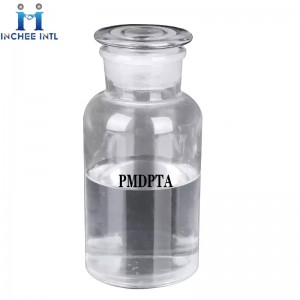
Manufacturer Good Price Pentamethyldipropylenetriamine (PMDPTA) CAS:3855-32-1
PMDPTA is a low -smelling foam/gel balance catalyst, which can be used in polyether -type polyurethane soft foam, polyurethane hard bubbles and coating adhesives. PMDPTA is especially used in cold mold HR foam. PMDPTA is called five -base di -propyleneramine, which has a wide range of applications in various soft and hard foams. PMDPTA can provide a balanced starting response and gel response, and extend the foam reaction and gel response time. This catalyst can not only be used alone, but also shares with other catalysts and auxiliary agents. PMDPTA can be dissolved in polyether polyol.
It is easily dissolved in most solvents. Foam and gel reaction balance. The advantages are used in soft block foam, which can avoid the cracking and pinhole of the foam, which has excellent raising performance. Improve the processability, tolerance and surface curing performance of hard foam. Improve the higher hole of soft foam plastic.
Property properties: boiling point: 102 ° C / 1mmHg, density: 0,83 g / cm3, refractive index: 1.4450 to 1.4480, flash point: 92 ° C, acidity coefficient (PKA): 9.88 ± 0.28 (Predict). It is mainly used for alkaline melting phenols, and also used for inter -phenylphenols, etc., and is often used as catalysts in esterization and dehydration reactions; dye intermediate
CAS: 3855-32-1
