
Manufacturer Good Price Glycine Food grade CAS:56-40-6
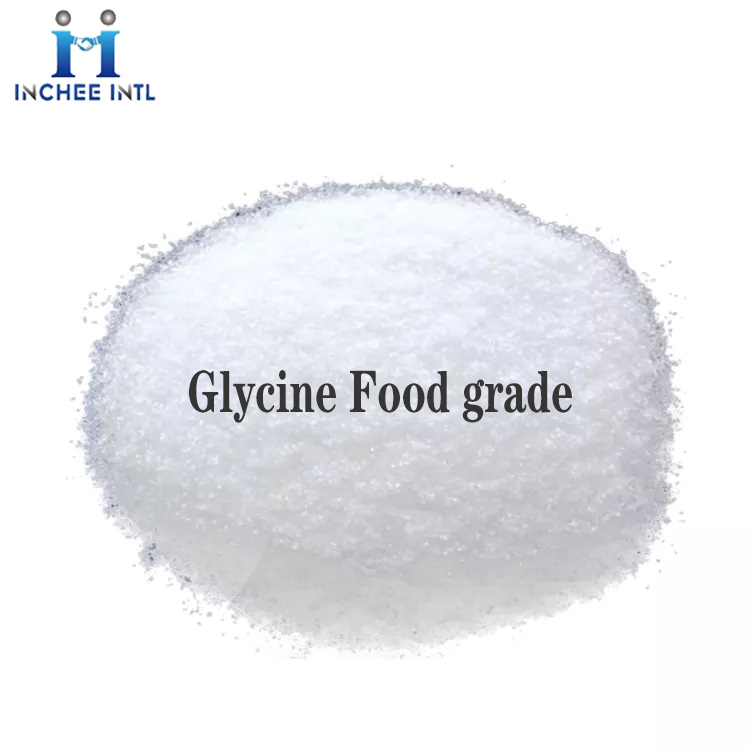

Synonyms
BLOTTING BUFFER;USP24 GLYCINE USP24;GLYCINE TECHNICAL;GLYCINE USP;Glycine (Feed Grade);Glycine (Food Grade);Glycine (Pharm Grade);Glycine (Tech Grade)
Applications of Glycine Food grade
(1) Use as seasoning agents, sweeteners, and DL-alanine, citrates, etc. in alcohol-containing beverages; synthetic sake and sophisticated drinks are used as acid-flavored correizers, pickled pickles, sweet sauce, sweet sauce, sweet sauce, sweet sauce , Soy sauce, vinegar and fruit juice are used as additives to improve food flavor, maintain original flavor, and provide sweet flavor.
(2) For preservatives such as cotton products, peanut butter, etc., can.
(3) Using its own amino and carboxyl groups, it has a buffer effect on the taste of salt and vinegar.
(4) Food brewing, meat processing and cool beverages, as well as removal agents of sugar sodium.
(5) It is used as a stabilizer for cream, cheese, artificial milk, fast food noodles, wheat flour and lard. (6) Polying vitamin C in food processing.
(7) 10%of the ingredients in MSG are glycine.
(8) It can be used as preservatives, which plays an important anticorrosive role.



Specification of Glycine Food grade
|
ITEM |
Specifications |
|
Appearance |
White monoclinic system or hexagonal crystal |
|
Assay |
≥ 98.5 |
|
Chloride |
≤ 0.40 |
|
Loss on drying |
≤ 0.30 |
Packing of Glycine Food grade


25kg/bag
Storage should be at cool, dry and ventilate.

Q1: What is food-grade glycine? What are its core characteristics?
Food-grade glycine, also known as aminoacetic acid, is one of the simplest and essential amino acids for the human body. It is a compliant food additive in accordance with the national standard GB1886.247-2016. It appears as white crystalline powder, odorless with a pure sweet taste, and features excellent water solubility with clear and stable aqueous solution. Its core functions include flavor enhancement, taste correction, bacteriostasis and preservation, anti-oxidation, and nutritional fortification. With mild and stable properties, it is applicable to most food processing scenarios and is completely safe when used within regulated dosages.
Q2: What are the differences between food-grade, industrial-grade and feed-grade glycine? Can they be mixed?
The three grades adopt completely different production standards, impurity control specifications and application scenarios, and cross-grade mixing and substitution are strictly prohibited. Food-grade glycine undergoes deep purification, activated carbon decolorization and precise impurity removal, with heavy metals, aniline residues, chlorides and other harmful substances strictly limited within food safety standards for direct food processing. Feed-grade glycine is only used for livestock and poultry feed additives. Industrial-grade glycine contains excessive impurities and heavy metals, mainly applied in chemical, electroplating and textile industries. Using industrial or feed-grade products in food production will cause serious food safety risks and regulatory violations.
Q3: Is glycine a sweetener or a nutritional agent?
It has dual attributes as both a nutritionally fortified amino acid and a natural functional flavoring auxiliary. It has a mild and pure sweet taste without cloying sweetness and can replace part of synthetic sweeteners. Meanwhile, it supplements essential amino acids for the human body. Different from artificial sweeteners, it is natural, safe and non-irritating.
Q4: What are the core functions of food-grade glycine in food processing?
1. Flavor enhancement and taste balancing: It delivers a mild fresh and sweet taste to improve the overall flavor of food, neutralizes sourness, bitterness and astringency of raw materials, covers peculiar smells from saccharin and other additives, and balances the proportion of sour, sweet and salty tastes for a mellow and mild mouthfeel.
2. Bacteriostasis and shelf-life extension: It inhibits the reproduction of harmful microorganisms such as Escherichia coli and Bacillus subtilis, delays food deterioration and spoilage, reduces reliance on chemical preservatives, and effectively extends the shelf life of meat products, pickled foods and soup bases.
3. Acid-base buffering and flavor stabilization: As an effective food buffer, it stabilizes the pH value of food, prevents sudden flavor changes and taste deterioration during processing and storage, and is suitable for wine, beverages and fermented food.
4. Anti-oxidation and color protection: It slows down enzymatic browning and oxidative discoloration, prevents blackening and darkening of meat and fruit and vegetable products, and maintains the original color and fresh texture of ingredients.
5. Nutritional fortification: It supplements essential amino acids for human bodies and improves the nutritional value of meal replacements, dairy products and functional beverages.
Q5: What food processing scenarios are applicable to food-grade glycine?
As a versatile food additive, it is widely used in condiments (chicken essence, monosodium glutamate, compound seasonings, soup bases), meat products, surimi products, pickled vegetables, soy sauce, vinegar, fruit juices, alcoholic beverages, functional foods, meal replacement powder, dairy products, pastries and desserts. It is a core auxiliary material for flavor optimization and fresh-keeping in the food industry.