
Manufacturer Good Price Glycine Industrial grade CAS:56-40-6
Synonyms
Aminoacetic acid; 2-Aminoacetic acid; Aciport;
Aminoethanoic acid; Glicoamin; Glycocoll; Glycolixir;
Glycosthene; Hampshire glycine; Padil
Applications of Glycine Industrial grade
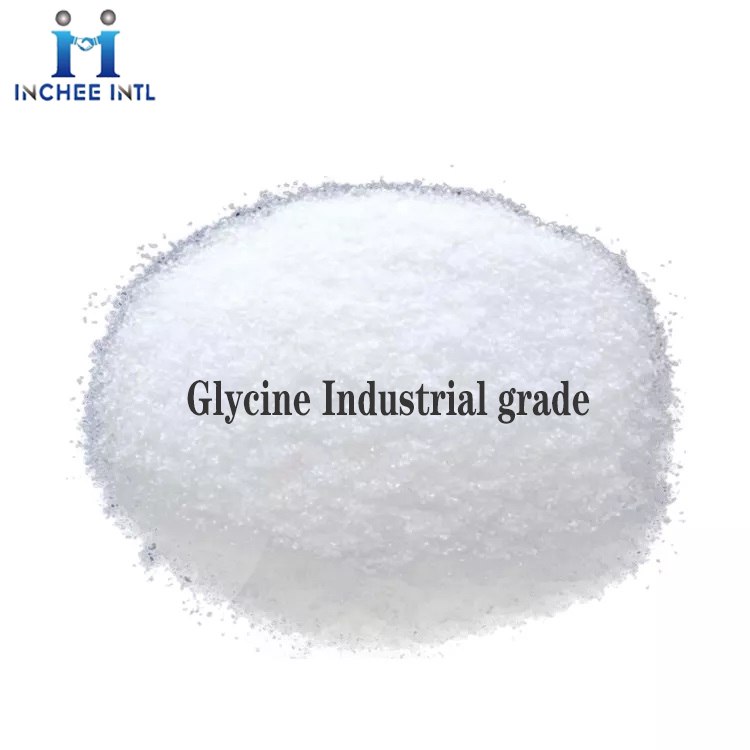
Glycine (Glycine, abbreviated Gly) and amino acid, its chemical formula is C2H5NO2, white solid, under atmospheric pressure is the simplest amino acid series structure, an amino acid body non-essential, both acidic and basic functional groups in the molecule, can be ionized in the water, has a strong hydrophilic, but belongs to the nonpolar amino acids, Soluble in polar solvents, but difficult to dissolve in non-polar solvents, and has a higher boiling point and melting point, through the adjustment of aqueous acid and alkaline solution can make glycine present different molecular morphology.
1.Used as biochemical reagent, used in medicine, feed and food additives, nitrogen fertilizer industry as non-toxic decarbonization agent.
2. Used in pharmaceutical industry, biochemical test and organic synthesis.
3. In pesticide production for the synthesis of pyrethroid insecticide intermediate glycine ethyl ester hydrochloride, can also be synthesized fungicide isobiurea and herbicide solid glyphosate, in addition, it is also used in chemical fertilizer, medicine, food additives, flavoring and other industries.


Specification of Glycine Industrial grade
|
ITEM |
Specification |
|
Appearance |
White monoclinic system or hexagonal crystal |
|
Assay |
≥ 98.5 |
|
Chloride |
≤ 0.40 |
|
Loss on drying |
≤ 0.30 |
Packing of Glycine Industrial grade


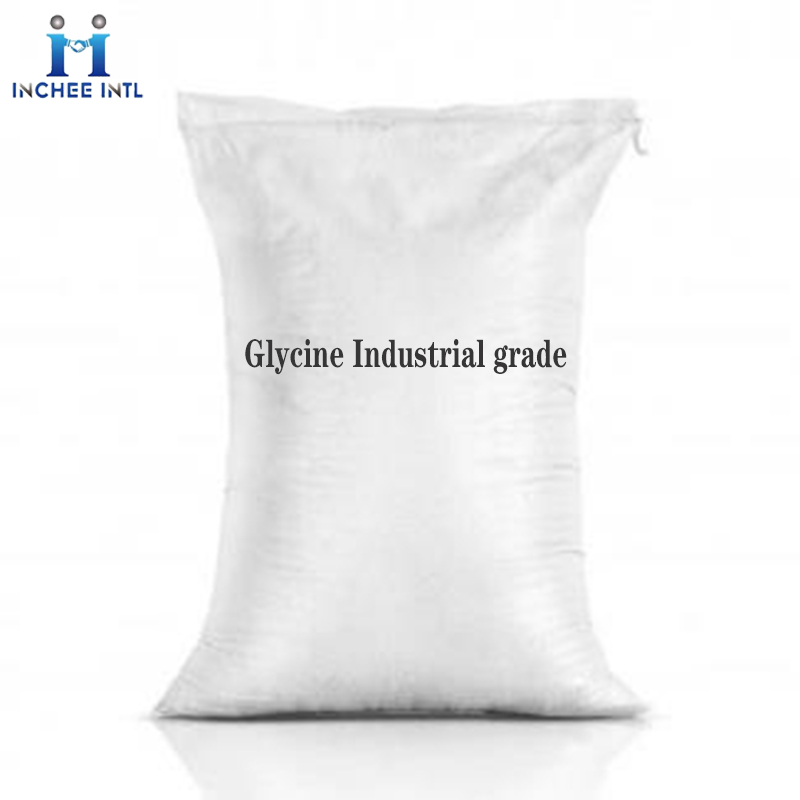
25kg/bag
Storage should be at cool, dry and ventilate.

Q1: What is industrial glycine? What are its core physical and chemical properties?
Industrial glycine, also known as aminoacetic acid, is the simplest structural α-amino acid and a fundamental fine chemical raw material. Under normal conditions, it appears as white crystalline powder or colorless monoclinic crystals, odorless and slightly sweet in taste. Core physical and chemical properties: It is an amphoteric compound containing both amino and carboxyl groups with dual acidic and alkaline properties. It has excellent water solubility with a solubility of 25g/100mL in water at 25°C, slightly soluble in ethanol, and insoluble in organic solvents such as acetone and ether. It features stable chemical properties at room temperature without easy decomposition, as well as outstanding chelating performance, high reaction activity and buffering capacity. With low toxicity and no strong corrosiveness, it is suitable for various industrial synthesis reactions.
Q2: What are the CAS number, molecular formula and core parameters of industrial glycine?
CAS Number: 56-40-6; EINECS Number: 200-272-2; Molecular Formula: C₂H₅NO₂; Molecular Weight: 75.07; Melting Point: 182℃; Boiling Point: 233℃; Density: 1.595g/cm³. The mainstream industrial-grade glycine on the market has a content of ≥98.5%, and high-purity industrial grade can reach 99.0%. It complies with the industry standard HG/T 2029-91 and is a special industrial raw material different from food-grade and feed-grade glycine.
Q3: What are the differences between industrial-grade, food-grade and feed-grade glycine?
The three types differ significantly in purity, impurity indicators and application scenarios, and cross-grade mixing and use are strictly prohibited: 1. Industrial-grade glycine: with a purity of 98.5%-99.0%, its heavy metal and impurity indicators only meet industrial production standards without food safety purification. It is cost-effective and exclusively used in industrial scenarios such as industrial synthesis, water treatment and electroplating. 2. Feed-grade glycine: with lower impurities and strictly controlled heavy metals, it meets feed additive safety standards and is used for nutritional supplementation in livestock and aquaculture feed. 3. Food-grade glycine: with a purity of ≥99.5%, it has strictly compliant heavy metals, ash and harmful impurities, applicable to food seasoning, food additives and nutritional fortification. Important Reminder: Industrial glycine is strictly prohibited for food processing, feed addition, pharmaceutical preparation and other scenarios involving human and animal contact.
Q4: What grades does industrial glycine have? What are the applicable scenarios for each grade?
There are two mainstream grades of industrial glycine with clearly divided application scenarios: 1. Ordinary Industrial Grade (≥98.5%): The most versatile grade with impurities meeting basic industrial standards, suitable for conventional industrial scenarios including pesticide synthesis, general water treatment, electroplating auxiliaries, chemical intermediate synthesis and cleaning agent preparation. 2. High-purity Industrial Grade (≥99.0%): It has lower contents of ash, chloride and heavy metals with higher purity, adapted to high-precision industrial scenarios with strict impurity requirements, such as high-end fine chemical synthesis, premium electroplating chelating agents, precision water treatment and high-end buffer preparation.
Q5: How to simply distinguish the quality of industrial glycine?
The quality can be quickly identified through intuitive methods, while accurate judgment requires professional testing: 1. Appearance: High-quality industrial glycine is uniform white crystalline powder without yellowish, gray or black particles, caking or impurity dust. 2. Solubility: It can be completely dissolved in clean water quickly to form a clear solution without turbidity, precipitation or suspended solids. 3. Stability: It resists moisture absorption, caking and discoloration when hermetically stored at room temperature. 4. Odor: It has no peculiar or pungent smell. Products with pungent odor, yellowing or turbid solution are inferior or deteriorated. Core testing indicators include content, moisture, ash, chloride and heavy metals (calculated as lead).
Q6: Is slight caking of industrial glycine a quality problem?
Slight caking is not a quality problem. Glycine is hygroscopic and prone to slight caking due to humid storage conditions or stacking extrusion during long-distance transportation, which is a normal physical phenomenon. Breaking up the caked material will not change its chemical composition, purity and service performance, and it can be used normally. Hard caking, overall yellowing, turbid solution or peculiar odor indicate moisture deterioration and excessive impurities, making the product unqualified for production use.