
Manufacturer Good Price Sodium fluoride CAS:7681-49-4

Synonyms
Sodium fluoride; NaF;SF; Inorganic Fluoride
Applications of Sodium fluoride
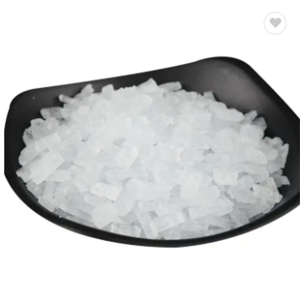
Sodium fluoride; NaF;SF; Inorganic Fluoride, It is colorless crystals or shiny white powder, belongs to tetragonal system, is positive hexahedral or octahedral crystals. It is slightly soluble in alcohol, soluble in water. Aqueous solution is acidic. It dissolves in hydrofluoric acid to form sodium hydrogen fluoride.
1. Sodium fluoride is mainly used as Inlaid steel for mechanical blade and planer to enhance weld strength. Secondly, it is used as wood preservatives, fungicides in brewing industry, agricultural pesticides (should be infected with blue), medical preservatives, welding flux, fluorine agent for drinking water. Also used for producing other fluoride and casein glue, sodium fluoride toothpaste, as adhesives, also used in paper and metallurgical industries. In the production of elemental fluorine, it is used for removing trace amounts of hydrogen fluoride. In addition, it is also used in enamels and pharmaceutical industries.
2. Sodium fluoride is used as disinfectants, preservatives, pesticides, also used in enamel, wood preservation, medicine, metallurgy, manufacturing of fluorides and so on.
3. Used for determination of scandium in microanalysis, determination of phosphorus in photoelectric colorimetric analysis, used as reagent, the masking agents, preservatives of iron and steel.
4. As food supplements. According to Chinese regulations for salt, the maximum usage is 0.1g/kg.
5. It is used as wood preservatives, pharmaceutical preservative, welding flux and used in paper industry, this company's products are specific level toothpastes, can also be used as purifying agent for drinking water, and used for hides and skin processing in tanning industry, for smelting and refining of light metal, and protection layer of light metal, for adhesive corrosion, and manufacturing boiling steel.
6. Sodium fluoride is used as the Phosphate accelerator in coating industry, makes phosphating solution stability, phosphate refinement, improves the performance of phosphate coating. Aluminum and its alloys phosphate can close negative catalytic Al3 + of great danger, and make phosphating smoothly. It is used as wood preservatives, agricultural pesticides, fungicides in brewing industry, pharmaceutical preservative, welding flux, alkaline zincate zinc additives and enamel, paper and so on.



Specification of Sodium fluoride
|
ITEM |
SPEC |
|
Sodium Fluoride |
98.00%MIN |
|
Water(H2O) |
0.5%MAX |
|
Sulphate(SO42-) |
0.30%MAX |
|
Water-insoluble matter |
0.7% MAX |
|
Sodium Carbonate(Na2CO3) |
0.5%MAX |
|
Acidity(as HF) |
0.1%MAX |
|
Silicon oxide(SiO2) |
0.5%MAX |
Packing of Stearic acid


25kg/bag
Storage should be at cool, dry and ventilate.

Q1: What is sodium fluoride? What are its core physical and chemical properties?
Sodium fluoride is a common inorganic fluoride and a basic fine chemical raw material, which is an ionic compound composed of sodium ions and fluoride ions. Its CAS number is 7681-49-4, molecular formula is NaF, and molecular weight is 41.99. At room temperature, it appears as colorless transparent cubic crystals or white crystalline powder, odorless with a slightly salty taste. It has a melting point of 993℃ and a boiling point of 1700℃. It is well soluble in water and hydrofluoric acid, slightly soluble in ethanol, and insoluble in acetone. Its aqueous solution is weakly alkaline. It features stable chemical properties at room temperature and can corrode glass, ceramics and silicate materials under high-temperature molten state.
Q2: What is the pH value of sodium fluoride aqueous solution? Why is it not neutral?
The aqueous solution of sodium fluoride is weakly alkaline with a pH value of 7.5-8.5. Sodium fluoride is a salt of strong base and weak acid. Fluoride ions undergo slight hydrolysis in water and combine with hydrogen ions, promoting water ionization and making the concentration of hydroxide ions slightly higher than that of hydrogen ions. This is the core reason why sodium fluoride solution cannot be stored in glass containers for a long time.
Q3: What are the core advantages of sodium fluoride compared with other fluorides?
Compared with potassium fluoride and calcium fluoride, sodium fluoride has controllable high purity, stable water solubility and low impurity content. It possesses excellent stability at room temperature with no deliquescence or deterioration. Meanwhile, its fluoride ions have moderate activity and mild reaction performance without strong corrosiveness, making it suitable for most fine chemical, metallurgical and water treatment processes. In contrast, calcium fluoride is barely soluble in water with low activity, while potassium fluoride has strong deliquescence and high storage difficulty. Therefore, sodium fluoride is the most widely used basic fluoride raw material in industry.
Q4: What are the mainstream specifications and quality standards of sodium fluoride on the market?
Sodium fluoride is mainly divided into industrial grade and reagent grade, generally packed in 25kg woven bags or cardboard drums. Industrial grade is the mainstream product, with core quality indicators: purity ≥98%, moisture ≤0.3%, silica ≤0.2%, sulfate ≤0.1%, lead heavy metal ≤0.005%, with no visible mechanical impurities. Reagent grade has a purity of ≥99% with stricter impurity standards, applied for laboratory precision experiments and high-end synthesis. The product is available in powder and granular forms to meet different process requirements.
Q5: What are the core application fields of sodium fluoride?
Sodium fluoride is widely applied in industry, metallurgy, water treatment, building materials and daily chemical industries. 1. Water treatment: It serves as a scale removal, dephosphorization and defluorination agent for drinking water and industrial wastewater, stabilizing water quality, inhibiting algae growth and providing corrosion inhibition for boiler water. 2. Metallurgy industry: Used as a flux for aluminum and steel smelting to reduce melting temperature and improve production efficiency and product purity. 3. Building materials & glass industry: Applied as glass etchant, ceramic flux and enamel whitening agent for glass frosting and ceramic glaze processing. 4. Fine chemical industry: Used for manufacturing fluorides, pesticides, preservatives and welding fluxes. 5. Other fields: It can be used for wood preservation, leather tanning, agricultural insect prevention and laboratory analytical reagents.
Q6: Can sodium fluoride be used for dental caries prevention and food additives?
Food-grade sodium fluoride is strictly prohibited from being added to food. It is only legally used as a trace anti-caries ingredient in toothpaste and oral care products to strengthen enamel and prevent dental caries through surface fluorination. Industrial-grade sodium fluoride is toxic. It is absolutely forbidden to contact food, drinking water and oral mucosa, and cannot be used in food processing and direct drinking water treatment. Product grades must be strictly distinguished during use.
Q7: Does sodium fluoride deliquesce and agglomerate? What are the storage requirements?
Sodium fluoride has extremely low hygroscopicity at room temperature and rarely deliquesces or agglomerates, showing better physical stability than most fluorides. However, slight moisture absorption and agglomeration may occur under long-term high humidity or rain exposure conditions. It should be stored in a cool, dry and ventilated dedicated chemical warehouse, kept away from water sources, acids, alkalis and oxidants. Keep the packaging fully sealed and avoid open storage. Stacked goods shall be elevated for moisture prevention, and the warehouse humidity should be controlled below 70%.
Q8: What is the standard packaging and transportation precautions of sodium fluoride?
Industrial-grade sodium fluoride is normally packed in 25kg double-layer moisture-proof woven bags, while high-end reagent grade adopts 25kg sealed cardboard drums for moisture-proof, leakage-proof and damage-proof purposes. During transportation, the packaging must be kept intact and sealed to avoid rain, moisture and strong sunlight exposure. As a general chemical hazardous material, sodium fluoride is forbidden to be transported together with strong acids, strong alkalis, edible chemicals and oxidants. Transport vehicles must be dry and ventilated. Handle with care during loading and unloading to prevent package damage and powder leakage.
Q9: What is the shelf life of sodium fluoride? Can deteriorated products be used?
Under sealed, dry and normal temperature storage conditions, the shelf life of sodium fluoride is 24 months, longer than most conventional chemical raw materials. Products stored properly without moisture, pollution, discoloration or agglomeration can still be used normally even near the shelf life. Seriously hardened, damp, yellowed or blackened products with reduced purity are not allowed for precision chemical processing, water treatment and oral auxiliary applications. They can only be used for low-end metallurgical flux production after passing purity testing, and shall be scrapped if impurities exceed the standard.