
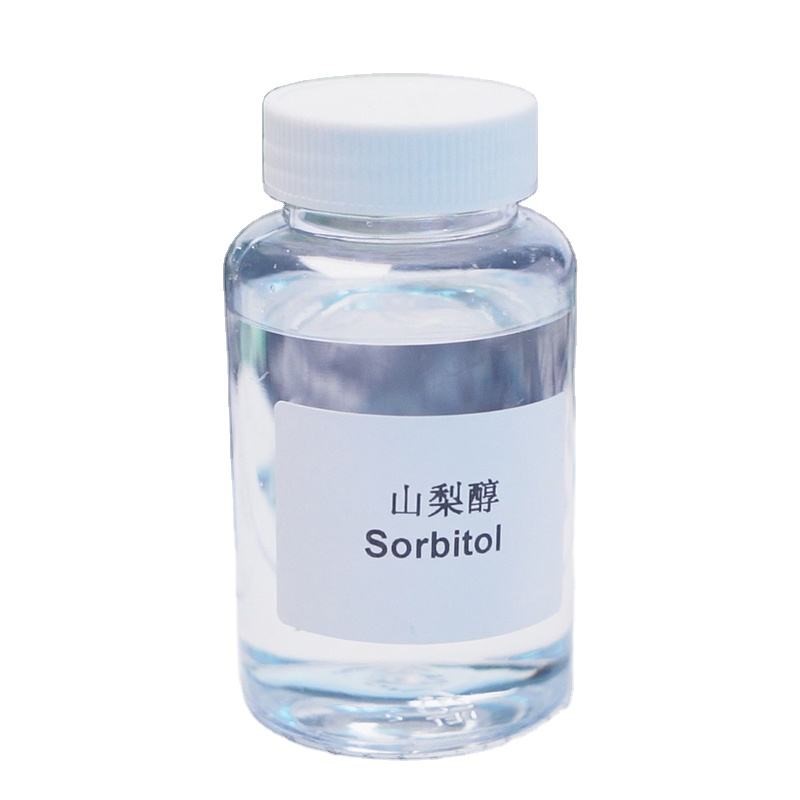
High-quality Sorbitol Liquid 70% for Superior Performance

Application
One of the key features of sorbitol liquid 70% is its ability to absorb moisture. When used in food, it can prevent the product from drying out, aging, and prolong the shelf life of the product. It can also prevent the crystallization of sugar, salt, and other ingredients in food, which helps maintain the strength of the sweet, sour, and bitter balance, and increase the overall flavor of the food.
In addition to its many applications in the food industry, sorbitol liquid 70% is also used in cosmetics. It is commonly found in moisturizers, toothpaste, and other personal care products due to its moisturizing properties. It can help keep skin hydrated, prevent dryness, and improve the overall appearance of the skin.
In the pharmaceutical industry, sorbitol is used as an excipient in many medications. It can help improve the solubility of certain drugs and can also act as a sweetener for certain liquid medications.
Specification
|
Compound |
Specification |
|
Appearance |
colorless clear and ropy settling liquid |
|
Water |
≤31% |
|
PH |
5.0-7.0 |
|
Sorbitol contents (on dry base) |
71%-83% |
|
Reducing sugar (on dry base) |
≤0. 15% |
|
Total Sugar |
6.0%-8.0% |
|
Residue by Burning |
≤0.1 % |
|
Relative density |
≥1.285g/ml |
|
Refraction index |
≥1.4550 |
|
Chloride |
≤5mg/kg |
|
Sulphate |
≤5mg/kg |
|
Heavy metal |
≤1.0 mg/kg |
|
Arsenic |
≤1.0 mg/kg |
|
Nickel |
≤1.0 mg/kg |
|
Clarity & Colour |
Lighter than standard color |
|
Total Plate Count |
≤100cfu/ml |
|
Molds |
≤10cfu/ml |
|
Appearance |
colorless clear and ropy settling liquid |
Product packaging
Package:275KGS/DRUM
Storage: Solid sorbitol packaging should be moisture-proof, stored in a dry and ventilated place, take out the use of attention to seal the bag mouth. It is not recommended to store the product in cold storage because it has good hygroscopic properties and is prone to clumping due to the large temperature difference.


Summarize
Overall, sorbitol liquid 70% is a versatile ingredient with many different applications across various industries. It is prized for its stable chemical properties, good moisture absorption, and ability to enhance the flavor and shelf life of food products. If you are looking for a reliable ingredient to incorporate into your products, consider sorbitol liquid 70%.

Q1: What is 70% sorbitol? What are its core physical and chemical properties?
70% sorbitol, also known as liquid sorbitol, is a transparent viscous liquid formulated with D-sorbitol and purified water with a solid content of approximately 70%. It is a highly versatile polyol raw material widely used in food, daily chemical, pharmaceutical and chemical industries. At room temperature, it is a colorless, transparent, odorless and sweet-tasting viscous liquid. It features excellent moisture retention, hygroscopicity, thickening performance, anti-crystallization property and surface activity. With stable chemical properties, it is high-temperature and acid-alkali resistant, not easy to oxidize or ferment and deteriorate. It has superior water solubility, miscible with water, glycerin and ethanol in any proportion while insoluble in grease. It possesses five core characteristics: moisturizing, water retention, sweetening, antifreezing and softening.
Q2: What are the CAS number, molecular formula, core parameters and executive standards of 70% sorbitol?
CAS Number: 50-70-4; Molecular Formula: C₆H₁₄O₆; Solid Content: 68.0%–72.0% (national standard 70% specification); pH Value: 5.0–7.0; Sweetness: about 50%–60% of sucrose; Moisture content: approximately 30%. The mainstream domestic executive standard is GB 1886.187-2016 National Food Safety Standard – Food Additives Sorbitol and Sorbitol Solution. Daily chemical and industrial grades comply with corresponding industry general standards. It is a legal and compliant universal additive and chemical auxiliary agent.
Q3: What is the difference between 70% liquid sorbitol and solid sorbitol? How to choose the right one?
Both products share the same core active ingredients, differing only in form, concentration and application scenarios for targeted selection: 1. 70% liquid sorbitol: no pre-dissolution required, direct feeding available, featuring convenient operation, high cost performance, good fluidity and no dust generation. It is suitable for large-scale continuous production and widely applied in moisturizing, antifreezing, softening and anti-crystallization scenarios. 2. Solid sorbitol (crystalline powder): with purity ≥99% and anhydrous system, it is applicable to moisture-sensitive formulas, high-purity formulations, dry powder batching and high-end pharmaceutical tableting. 70% liquid sorbitol is the preferred choice for conventional food and beverage, toothpaste and daily chemical, water treatment, glue and coating industries.
Q4: What grades does 70% sorbitol have? What are the applicable scenarios for each grade?
There are two mainstream grades on the market: food grade and daily chemical/industrial grade. Cross-grade mixing and use are strictly prohibited: 1. Food-grade 70% sorbitol: ultra-low impurities, compliant heavy metal indicators, sterile and odorless, complying with national food additive standards. It is used for food sweetening, moisturizing, anti-sanding, anti-crystallization, pastry softening, beverage blending, candy, chocolate, preserved fruit and filling production, as well as auxiliary materials for oral pharmaceuticals. 2. Daily chemical/industrial-grade 70% sorbitol: meeting industrial impurity standards with higher cost performance, suitable for non-edible scenarios such as moisturizing additives for toothpaste, facial cleansers and skin care products, cosmetic emollients, glue plasticizers, resin synthesis, antifreeze solutions, textile softeners and water treatment auxiliaries.
Q5: How to quickly identify the quality of 70% sorbitol?
Product quality can be quickly identified through intuitive observation, while accurate detection requires third-party testing: 1. Appearance: High-quality product is clear and transparent without turbidity, flocs, precipitation, delamination or color difference. 2. Odor: pure and sweet taste with no sourness, fermented smell or pungent peculiar odor. 3. State: uniform fluidity at room temperature without viscous agglomeration or mildew deterioration. 4. Stability: resistant to discoloration, fermentation and bacterial growth during storage at room temperature. Inferior products are prone to turbidity and yellowing, strong sour taste, delamination, precipitation and pungent odor. Core testing indicators include solid content, moisture, pH value, reducing sugar, heavy metals and ignition residue.
Q6: Does slight turbidity and a small amount of precipitation in 70% sorbitol mean deterioration?
Slight turbidity and micro crystallization at low temperature are normal physical phenomena rather than quality problems. The solubility of 70% sorbitol decreases at low temperature, leading to precipitation of fine sorbitol crystals. Warming up to 25–30℃ with gentle stirring can restore complete clarity and transparency, with no impact on chemical composition, purity and use effect. However, persistent turbidity, yellowing, sour taste, a large number of flocculent precipitates or fermented odor at room temperature indicate bacterial deterioration, and the product is prohibited for use.
Q7: What are the core applications of food-grade 70% sorbitol?
As an essential raw material for multiple industries, 70% liquid sorbitol has core applications covering four major fields: 1. Food Industry (main application): serving as a low-sugar sweetener to replace sucrose, it keeps pastries, breads and cakes soft and moisturized, prevents dryness and hardening, and extends shelf life; it avoids sugar blooming and crystallization of candies, chocolates and syrups and improves taste; it adjusts sweetness, retains moisture and protects color of beverages, dairy products and cold drinks. 2. Daily Chemical Industry: acting as a core moisturizing and emollient agent for toothpaste, skin care products, facial cleansers and shampoos, it provides non-sticky moisturizing effect and stabilizes the formula system. 3. Pharmaceutical Industry: used as auxiliary materials for oral liquids, syrups and external ointments for moisturizing, thickening, solubilizing and flavor correction. 4. Chemical Industry: applied in the synthesis of Span and Tween surfactants, resin plasticizers, glue softeners, textile auxiliaries, antifreeze solutions and metal corrosion inhibitors.
Q8: What are the general addition ratios and usage methods of 70% sorbitol?
Liquid sorbitol can be directly fed without pre-dissolution. The reference ratios for different scenarios are as follows: 1. Softening of baked pastries and breads: 3%–8% addition to effectively prevent air-drying, hardening and aging residue; 2. Candies, chocolates and syrups: 5%–12% addition to prevent sugar blooming and crystallization and improve soft taste; 3. Beverages, cold drinks and dairy products: 1%–5% addition to adjust sweetness, retain moisture, protect color and optimize taste; 4. Toothpaste and skin care daily chemicals: 2%–10% addition as a moisturizing and emollient agent to stabilize formulas; 5. Industrial glues, resins and textile auxiliaries: 5%–15% addition according to technical requirements for plasticizing, softening and antifreezing effects. It is suitable for feeding at room temperature and can be freely blended with water, glycerin and ethanol.
Q9: What is the main function of 70% sorbitol in food? What is the difference from sucrose?
Core functions: moisturizing and softening maintenance, anti-crystallization, anti-sugar blooming, bacteriostasis and anti-corrosion, sweetness adjustment, delaying food aging and extending shelf life. Core differences from sucrose: 1. Lower sweetness with fresh and non-cloying taste, suitable for low-sugar and sugar-free formulas; 2. Resistant to yeast fermentation and mildew with stronger bacteriostatic performance; 3. Stable hygroscopicity to lock moisture for a long time and prevent pastries from drying and hardening; 4. Low glycemic index, metabolized without insulin dependence, adapting to low-sugar food formulas; 5. Better high-temperature resistance, no coking or discoloration during high-temperature processing.
Q10: Can food-grade and industrial-grade 70% sorbitol be mixed or substituted for each other?
Mixing and substituting food grade with industrial grade are strictly prohibited. Food-grade sorbitol undergoes sterilization, impurity removal and strict heavy metal control with qualified microbial indicators, complying with food safety standards for edible products. Industrial/daily chemical-grade sorbitol has no food-grade sterile purification, and its microbial and impurity indicators only meet industrial standards, posing potential food safety risks. It is forbidden for food, oral pharmaceutical and maternal and infant products, and can only be used for non-edible daily chemical, chemical and industrial auxiliary scenarios.