
Sodium Persulfate: The Ultimate Chemical Catalyst for Your Business Needs

Application
One of the key features of sodium persulfate is its effectiveness as a bleaching agent. It is commonly used in hair dyes and other cosmetic products to help remove color and lighten hair. Sodium persulfate is also used as a laundry bleaching agent, helping to remove stains and brighten fabrics.
In addition to its bleaching properties, sodium persulfate is also a powerful oxidant. It can be used in a variety of industrial applications, including wastewater treatment, pulp and paper production, and electronics manufacturing. In these applications, it helps to remove contaminants, improve product quality, and reduce waste.
Sodium persulfate is also an excellent emulsion polymerization promoter. It is commonly used in the production of plastics, resins, and other polymeric materials. By promoting the reaction between monomers and polymerizing agents, sodium persulfate helps to ensure high-quality products with consistent properties.
One of the advantages of sodium persulfate is its solubility in water. This makes it easy to use in a variety of applications, including as a bleaching agent and an oxidant. However, it is important to note that sodium persulfate is insoluble in ethanol, which can limit its use in certain applications.
Specification
|
Compound |
Specification |
|
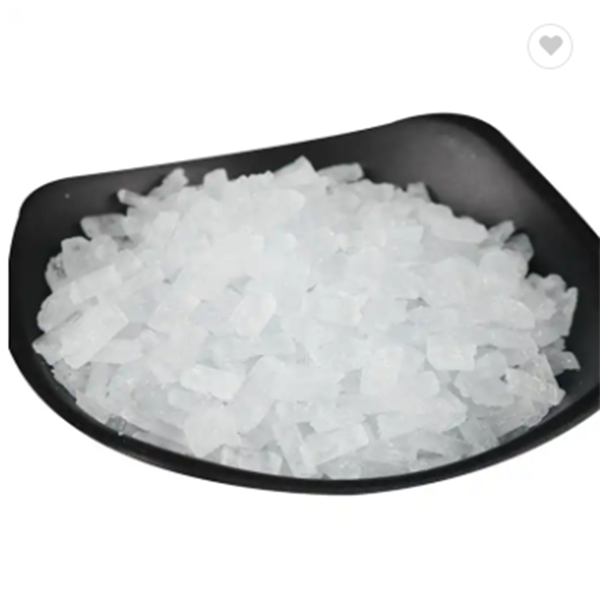
APPEARANCE |
WHITE CRYSTALLINE |
|
ASSAY Na2S2O8 ω (%) |
99 min |
|
ACTIVE OXYGEN ω (%) |
6.65 min |
|
PH |
4-7 |
|
Fe ω (%) |
0.001 max |
|
CHLORIDE ω (%) |
0.005 max |
|
MOISTURE ω (%) |
0.1max |
|
Mn ω (%) |
0.0001 max |
|
HEAVY METAL(pb) ω (%) |
0.01 max |
Product packaging
Package:25kg/Bag
Operation precautions: closed operation, strengthen ventilation. Operators must be specially trained and strictly abide by operating procedures. It is recommended that operators wear a headhood-type electric air supply filter dust respirator, polyethylene anti-pollution suit, and rubber gloves. Keep away from fire, heat source, no smoking in the workplace. Avoid producing dust. Avoid contact with reducing agents, active metal powders, alkalis and alcohols. When handling, light loading and unloading should be done to prevent damage to packaging and containers. Do not shock, impact or friction. Equipped with the corresponding variety and quantity of fire equipment and leakage emergency treatment equipment. An empty container may contain harmful residue.
Storage precautions: Store in a cool, dry and well-ventilated warehouse. Keep away from fire and heat. The temperature of the storage room should not exceed 30℃, and the relative humidity should not exceed 80%. The package is sealed. It should be stored separately from reducing agents, active metal powders, alkalis, alcohols, and avoid mixed storage. The storage area should be equipped with suitable materials to contain leaks.


Summarize
Overall, sodium persulfate is a versatile and effective compound with a wide range of applications. Its use as a bleaching agent, oxidant, and emulsion polymerization promoter make it a valuable tool for many different industries. Whether you're producing plastics, cleaning wastewater, or brightening fabrics, sodium persulfate can help you get the job done.

Q1: What is sodium persulfate? What are its core physical and chemical properties?
Sodium persulfate, also known as sodium peroxydisulfate, is a high-end inorganic strong oxidizer and a core product of the persulfate series. Its CAS number is 7775-27-1, molecular formula is Na₂S₂O₈, and molecular weight is 238.13. It appears as odorless white crystalline powder with a salty taste at room temperature. It is easily soluble in water with an aqueous acidic solution and insoluble in organic solvents such as ethanol. It features good thermal stability but is prone to decomposition when exposed to heat, moisture or reducing substances, releasing oxygen and generating sulfate. With strong oxidizing property, high redox potential, mild reaction, no residue and no pollution, sodium persulfate is a widely used environmentally friendly industrial oxidizer.
Q2: What is the acidity and alkalinity of sodium persulfate aqueous solution? Why is it acidic?
The aqueous solution of sodium persulfate is weakly acidic with a pH value of 2-4. As a persalt formed from strong acid, sodium persulfate undergoes slight hydrolysis after dissolving in water, producing a small amount of hydrogen ions and hydrogen persulfate ions, which makes the solution acidic. Meanwhile, its hydrolysis process slowly releases active oxygen, and the acidity of the aqueous solution increases slightly with storage time. Therefore, the solution is recommended to be prepared and used immediately.
Q3: What are the core differences between sodium persulfate, ammonium persulfate and potassium persulfate? How to choose the right product?
The three persulfates have similar oxidizing properties, with core differences in decomposition products, stability and application scenarios. Sodium persulfate produces harmless sodium sulfate after decomposition, featuring good water solubility, moderate cost and universal applicability for most industrial oxidation, decolorization and degradation scenarios. Ammonium persulfate is deliquescent with poor stability and leaves ammonium residues after decomposition, mainly used for PCB etching. Potassium persulfate has low water solubility and high price, mostly applied in high-end fine synthesis. Sodium persulfate is the preferred choice for conventional industrial environmental protection treatment and chemical oxidation.
Q4: What are the mainstream specifications and quality standards of sodium persulfate?
The mainstream product on the market is industrial superior grade, generally packed in 25kg woven bags or cardboard drums. Core quality indicators: purity ≥99.0%, moisture ≤0.10%, active oxygen ≥6.65%, lead heavy metal ≤0.001%, iron ≤0.0005%, with no mechanical impurities and clear water solubility. It is divided into ordinary industrial grade and high-purity refined grade. The high-purity grade has extremely low impurities, suitable for high-precision scenarios such as electronics and fine chemical industry.
Q5: What are the core application fields of sodium persulfate?
With the advantages of high efficiency, environmental protection and no secondary pollution, sodium persulfate is widely used in various industries. 1. Environmental water treatment: It degrades COD, removes color, breaks cyanide and eliminates odors for industrial and municipal sewage by oxidizing and decomposing organic pollutants. 2. Chemical industry: Serves as a polymerization initiator for macromolecular polymerization reactions such as acrylic acid and polyvinyl chloride, replacing traditional initiators. 3. Electronic industry: Acts as a PCB micro-etching agent for surface roughening and cleaning of circuit boards to improve coating adhesion. 4. Textile printing and dyeing: Used for fabric desizing, bleaching and decolorization to remove size and organic impurities. 5. Other fields: It can be used as an oxidizer for soil remediation, oil field plugging remover, paper bleaching agent and fine chemical oxidation auxiliary.
Q6: Can sodium persulfate be used in food and daily chemical products?
No. As an industrial strong oxidizer, sodium persulfate is strictly prohibited from being used in food and daily chemical products that directly contact human skin and mucous membranes. Its strong oxidizability will irritate and corrode human tissues. There is no food-grade certification standard for it. It is only applicable to industrial scenarios such as industrial oxidation, water treatment, electronic processing and textile chemical industry, and forbidden for food processing, oral care and skin care product addition.
Q7: Will sodium persulfate agglomerate and lose efficacy? What are the storage requirements?
Sodium persulfate has low hygroscopicity and rarely agglomerates under sealed and normal storage conditions. However, long-term exposure to high temperature and high humidity will accelerate its decomposition and agglomeration, resulting in active oxygen loss and reduced efficacy. It shall be stored in a cool, dry and ventilated warehouse dedicated for oxidizers, with ambient temperature ≤30℃ and humidity ≤65%. Keep fully sealed, away from heat sources, fire sources and direct sunlight. It is strictly forbidden to store together with organics, reducing agents, acids, alkalis, sulfur and phosphorus substances. Stack separately with moisture-proof elevation.
Q8: What is the standard packaging and transportation precautions of sodium persulfate?
Conventional industrial-grade sodium persulfate is packed in 25kg double-layer moisture-proof woven bags, while high-purity electronic grade adopts 25kg sealed cardboard drums for moisture-proof, leakage-proof and damage-proof purposes. Classified as Class 5.1 oxidizing hazardous chemical, it requires qualified hazardous chemical transportation. Keep packaging intact and sealed during transportation, avoiding rain, moisture and strong sunlight exposure. Mixed loading and transportation with flammables, reducing agents, strong acids, strong alkalis and edible chemicals is prohibited. Handle with care during loading and unloading to avoid friction, impact and package damage, preventing oxidation reactions caused by powder leakage.
Q9: What is the shelf life of sodium persulfate? Can damp and agglomerated products still be used?
The shelf life is 12 months under sealed, dry and normal temperature storage conditions. Slightly damp and agglomerated products without discoloration and overheating can be used for conventional scenarios such as ordinary water treatment and textile bleaching after passing active oxygen detection. Seriously agglomerated, yellowed, overheated or expired products with massive active oxygen loss and failed oxidation efficacy cannot be used, especially prohibited for high-precision scenarios including electronic etching, fine chemical synthesis and standard-compliant sewage treatment.