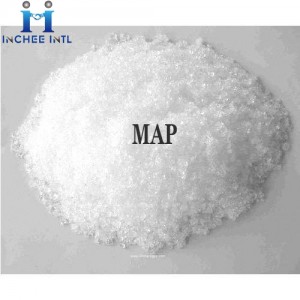

Manufacturer Good Price Ammonium Chloride CAS:12125-02-9


Synonyms
Ammonium Chloratum; Ammonium Chloridum; Ammonium Muriate; Sal Ammonia; Salmiac
Applications of Ammonium Chloride
Ammonium chloride, (industrial grade) Ammonium chloride (referred to as "chloramine", also known as halogen sand, chemical formula: NH4Cl) is colorless cubic crystal or white crystalline powder. It tastes salty and slightly bitter and belongs to acid salt. Its relative density is 1.527. It is soluble in water, ethanol and liquid ammonia but insoluble in acetone and ether. The aqueous solution is weakly acidic, and its acidity is enhanced while heating. When heated to 100 ° C, it begins to significantly volatilize, and when heated to 337.8 ° C, it will dissociate into ammonia and hydrogen chloride, which, on cold exposure, will re-combine to produce small particles of ammonium chloride and white smoke that is not easy to sink and very difficult to be dissolved in water. When heated to 350 ° C ,it will sublimate and when 520 ° C, it will boil. Its moisture absorption is small, and in the wet rainy weather can absorb moisture to cake. For the ferrous metals and other metals, it is corrosive, which, in particular, has greater corrosion of copper but no corrosion of pig iron. Ammonium chloride can be obtained from the neutralization reaction of ammonia and hydrogen chloride or ammonia and hydrochloric acid (reaction equation: NH3 + HCl → NH4Cl). When heated, it will decompose into hydrogen chloride and ammonia reaction (equation: NH4Cl → NH3 + HCl) and the reaction is only to the right if the container is open system.
Ammonium chloride is mainly used for dry batteries, storage batteries, ammonium salts, tanning, plating, medicine, photography, electrodes, adhesives, etc. Ammonium chloride is also an available nitrogen chemical fertilizer whose nitrogen content is 24% to 25%. It is a physiological acidic fertilizer and suitable for wheat, rice, corn, rapeseed and other crops. It have the effects of enhancing fiber toughness and tension and improving quality especially for cotton and linen crops. However, due to the nature of ammonium chloride, if the application is not right, it will bring some adverse effects to soil and crops.
Technical conditions: the implementation of the People's Republic of China national standard GB-2946-82.
1. Appearance: white crystal
2. ammonium chloride content (dry basis) ≥ 99.3%
3. moisture content ≤1.0%
4. sodium chloride content (dry basis) ≤0.2%
5. iron content ≤0.001%
6. heavy metal content (in terms of Pb) ≤0.0005%
7. water insoluble content ≤0.02%
8. sulfate content (in terms of SO42-) ≤0.02%
9. pH: 4.2-5.8
Ammonium chloride is used as a thickener and as an additive in non-alcoholic toners. According to cosmetic formulators, the ammonium component provides the tingling or stinging sensation that some people associate with toners or aftershaves, and which, in regular toners, is usually provided by the alcohol content. Ammonium chloride’s use is the result of preference in formulation feel.
Ammonium Chloride is a dough conditioner and yeast food that exists as colorless crystals or white crystalline powder. approximately 30–38 g dissolves in water at 25°c. the ph of a 1% solution at 25°c is 5.2. it is used as a dough strengthener and flavor enhancer in baked goods and as a nitrogen source for yeast fermentation. it is also used in condiments and relishes. another term for the salt is ammonium muriate.
White crystals made by ammonia salts acting upon hydrochloric acid followed by crystallization. Ammonium chloride is also known as sal ammoniac. Soluble in water and alcohol, ammonium chloride was used as a halide in many processes, including the salted paper, albumen paper, albumen opaltype, and gelatin emulsion processes.



Specification of Ammonium Chlorid
|
ITEM |
|
|
Appearance |
White Crystalline |
|
Ammonium Chloride Content |
≥99.6 |
|
Moisture |
≤0.7 |
|
ignition residue |
≤0.3 |
|
Ferrum content |
≤0.007 |
|
Metal |
≤0.0003 |
|
Sulphate |
≤0.015 |
|
PH (200 /123℃ |
4.0-5.8 |
Packing of Ammonium Chloride


25kg/bag Ammonium chloride
Storage should be at cool, dry and ventilate.
FAQ
Q1: What is ammonium chloride? What are its core physical and chemical properties?
Ammonium chloride, abbreviated as ammonium chloride, is a common inorganic ammonium salt, a basic chemical raw material and an important nitrogen fertilizer material. Its CAS number is 12125-02-9, molecular formula is NH₄Cl, and molecular weight is 53.49. At room temperature, it appears as colorless cubic crystals or white crystalline powder, odorless with a salty, cool and slightly bitter taste. It is highly soluble in water and glycerol, slightly soluble in ethanol, and insoluble in acetone and ether. It has low hygroscopicity but may slightly absorb moisture and agglomerate in humid environments. It features poor thermal stability and will sublime and completely decompose into ammonia and hydrogen chloride gas at 337.8℃. Its aqueous solution is weakly acidic with good electrical conductivity and catalytic properties.
Q2: What is the acidity and alkalinity of ammonium chloride aqueous solution? Why is it acidic?
The aqueous solution of ammonium chloride is weakly acidic with a pH value of 5.0-6.0 at room temperature. As a salt of strong acid and weak base, ammonium chloride undergoes hydrolysis of ammonium ions after dissolving in water. The ammonium ions combine with hydroxide ions in water and release hydrogen ions, making the solution weakly acidic. The acidity increases slightly with higher solution concentration and water temperature. Rising temperature accelerates ammonium hydrolysis and promotes the decomposition of ammonium chloride. Therefore, the aqueous solution is not suitable for long-term storage at high temperature.
Q3: What are the core differences between industrial-grade and agricultural-grade ammonium chloride?
The two grades have identical core chemical composition, and only differ in purity, impurity content and application scenarios, which are not interchangeable across fields. Agricultural-grade ammonium chloride is designed for crop fertilization with standard nitrogen content and ultra-low heavy metals, complying with agricultural safety standards. Industrial-grade ammonium chloride features higher purity, better water solubility and stricter control over impurities such as iron, sulfate and water-insoluble substances. It has no agglomeration and high solution transparency, suitable for electroplating, metallurgy, fine chemical and other industrial scenarios. In addition, industrial-grade products have better whiteness and fluidity, matching the requirements of precision industrial production processes.
Q1: What is ammonium chloride? What are its core physical and chemical properties?
Ammonium chloride, abbreviated as ammonium chloride, is a common inorganic ammonium salt, a basic chemical raw material and an important nitrogen fertilizer material. Its CAS number is 12125-02-9, molecular formula is NH₄Cl, and molecular weight is 53.49. At room temperature, it appears as colorless cubic crystals or white crystalline powder, odorless with a salty, cool and slightly bitter taste. It is highly soluble in water and glycerol, slightly soluble in ethanol, and insoluble in acetone and ether. It has low hygroscopicity but may slightly absorb moisture and agglomerate in humid environments. It features poor thermal stability and will sublime and completely decompose into ammonia and hydrogen chloride gas at 337.8℃. Its aqueous solution is weakly acidic with good electrical conductivity and catalytic properties.
Q2: What is the acidity and alkalinity of ammonium chloride aqueous solution? Why is it acidic?
The aqueous solution of ammonium chloride is weakly acidic with a pH value of 5.0-6.0 at room temperature. As a salt of strong acid and weak base, ammonium chloride undergoes hydrolysis of ammonium ions after dissolving in water. The ammonium ions combine with hydroxide ions in water and release hydrogen ions, making the solution weakly acidic. The acidity increases slightly with higher solution concentration and water temperature. Rising temperature accelerates ammonium hydrolysis and promotes the decomposition of ammonium chloride. Therefore, the aqueous solution is not suitable for long-term storage at high temperature.
Q3: What are the core differences between industrial-grade and agricultural-grade ammonium chloride?
The two grades have identical core chemical composition, and only differ in purity, impurity content and application scenarios, which are not interchangeable across fields. Agricultural-grade ammonium chloride is designed for crop fertilization with standard nitrogen content and ultra-low heavy metals, complying with agricultural safety standards. Industrial-grade ammonium chloride features higher purity, better water solubility and stricter control over impurities such as iron, sulfate and water-insoluble substances. It has no agglomeration and high solution transparency, suitable for electroplating, metallurgy, fine chemical and other industrial scenarios. In addition, industrial-grade products have better whiteness and fluidity, matching the requirements of precision industrial production processes.
Q7: Will ammonium chloride agglomerate? What are the storage requirements?
Ammonium chloride has low hygroscopicity and hardly agglomerates under sealed and dry storage conditions, performing better than most chemical fertilizers and inorganic salts. However, it will absorb moisture and slightly harden when exposed to long-term high temperature, high humidity and rain environments. It shall be stored in a cool, dry and ventilated special chemical warehouse with ambient humidity controlled below 70%, away from heat and fire sources. Keep the packaging fully sealed and avoid open storage. Never store together with alkaline substances such as soda ash, liquid caustic soda and lime, otherwise chemical reactions will occur to release ammonia gas and cause product failure. Stack goods with elevation to prevent moisture from the ground.
Q8: What is the standard packaging and transportation precautions of ammonium chloride?
It is normally packed in 25kg double-layer woven bags with moisture-proof and sealing performance. Food-grade and high-purity refined products adopt laminated bags or cardboard drums for leakage-proof, moisture-proof and damage-proof purposes. As a common non-hazardous chemical, ammonium chloride has no strict qualification requirements for transportation. Keep the packaging intact and sealed during transportation, avoiding rain soaking, water flooding and strong sunlight exposure. Mixed loading and transportation with strong alkalis, oxidants and edible materials is prohibited. Handle with care during loading and unloading to prevent package damage and material spilling, and keep transport vehicles dry and ventilated.
Q9: What is the shelf life of ammonium chloride? Can damp and agglomerated products still be used?
The shelf life is 24 months under sealed, dry and normal temperature storage conditions. Slightly damp and agglomerated ammonium chloride without discoloration, peculiar smell and deterioration can be normally used for agricultural fertilization and ordinary industrial auxiliary scenarios after crushing and passing index detection. Seriously hardened, yellowed, blackened, damp dissolved or impure products with reduced purity and effective ingredients are not allowed for high-precision scenarios such as electroplating, fine chemical industry and food processing, and shall be scrapped if impurities seriously exceed the standard.