



-
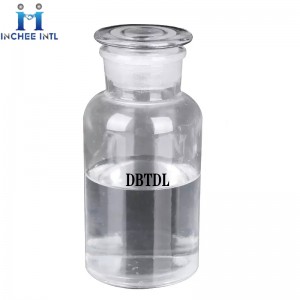
Manufacturer Good Price Dibutyltin Dilaurate (DBTDL) CAS: 77-58-7
Dibutyltin Dilaurate is an organic tin additive, Dibutyltin Dilaurate is soluble in benzene, toluene, carbon tetrachloride, ethyl acetate, chloroform, acetone, petroleum ether and other organic solvents and all industrial plasticizers, but insoluble in water. The high-boiling point multi-purpose organotin catalysts circulating on the market, Dibutyltin Dilaurate, are usually treated by special liquefaction. Dibutyltin Dilaurate are light yellow or colorless oily liquids at room temperature. , has excellent lubricity, transparency and weather resistance. Good resistance to sulfide pollution. Dibutyltin Dilaurate can be used as stabilizer in soft transparent products, as efficient lubricant in rigid transparent products, as catalyst for cross-linking reaction of acrylate rubber and carboxyl rubber, synthesis of polyurethane foam and polyester, and room temperature vulcanized silicone rubber. catalyst.
CAS: 77-58-7
-

Manufacturer Good Price N-METHYL PYRROLIDONE (NMP) CAS: 872-50-4
N-Methyl Pyrrolidone is referred to as NMP, molecular formula: C5H9NO, English: 1-Methyl-2-pyrrolidinone, the appearance is colorless to light yellow transparent liquid, slightly ammonia odor, miscible with water in any proportion, soluble in ether, acetone And various organic solvents such as esters, halogenated hydrocarbons, aromatic hydrocarbons, almost completely mixed with all solvents, boiling point 204 ℃, flash point 91 ℃, strong hygroscopicity, stable chemical properties, non-corrosive to carbon steel, aluminum, copper Slightly corrosive. NMP has the advantages of low viscosity, good chemical stability and thermal stability, high polarity, low volatility, and infinite miscibility with water and many organic solvents. NMP is a micro-drug, and the allowable limit concentration in the air is 100PPM.
CAS: 872-50-4
-
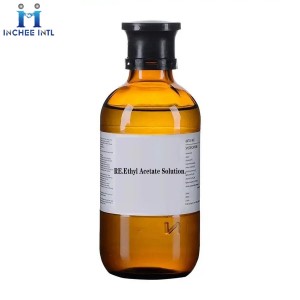
Manufacturer Good Price Triphenylmethane three isocyanate(ethyl acetate solution) CAS: 141-78-6 Brand: Desmodur_RE
the organic compound with the formula CH3COOCH2CH3. Ethyl acetate solution colorless liquid has a characteristic sweet smell (similar to pear drops) and is used in glues, nail polish removers, decaffeinating tea and coffee, and cigarettes (see list of additives in cigarettes). Ethyl acetate solution is the ester of ethanol and acetic acid;Ethyl acetate solution is manufactured on a large scale for use as a solvent. The combined annual production in 1985 of Japan, North America, and Europe was about 400,000 tons. In 2004, an estimated 1.3M tons were produced worldwide.
CAS: 141-78-6
-

UOP GB-222 Adsorbent
Description
UOP GB-222 adsorbent is a high capacity spherical metal oxide adsorbent designed to remove sulfur compounds. Features and benefits include:
- Maximized active component for higher capacity compared to previous generations
- High surface area substrate to optimize dispersion of the active metal oxide to extend bed life.
- Customized active metal oxide for ultra-low level impurity removal.
- High degree of macro-porosity and pore size distribution for rapid adsorption and short mass transfer zone.
-
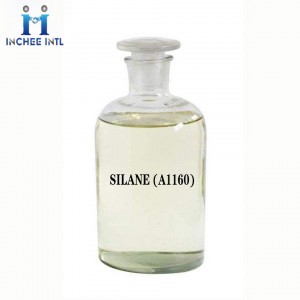
Manufacturer Good Price SILANE (A1160) 3-UREIDOPROPYLTRIETHOXYSILANE 50% SOLUTION IN METHANOL CAS: 7803-62-5
Silane is a colorless, spontaneously flammable (pyrophoric) gas. Silane has a choking odor and may form explosive mixtures with air. Silane will react violently with heavy metal halides and free halogens other than hydrogen chloride.
Synonyms :flots100sco;Monosilane;SiH4;Silicane;Silicon hydride;Silicon hydride (SiH4);tetrahydrure;tetrahydruredesilicium
CAS: 7803-62-5
-

UOP GB-217 Absorbent
Description
UOP GB-217 absorbent is a spherical metal oxide absorbent designed for the removal of trace sulfur compounds.
-

Manufacturer Good Price SILANE (A174) CAS: 2530-85-3-Methacryloxypropyltrimethoxysilane
3-Methacryloxypropyltrimethoxysilane is a methacryl-functional silane, 3-Methacryloxypropyltrimethoxysilane is a clear, light and heat sensitive liquid with a faintly sweet odour.
3-Methacryloxypropyltrimethoxysilane is used as adhesion promoter at organic/inorgainc interfaces, as surface modifier (e.g. imparting water repellency, organophilic surface adjustment) or as crosslinking of polymers).3-Methacryloxypropyltrimethoxysilane is used as a coupling agent to improve the physical and electrical properties of glass-reinforced and mineral-filled thermosetting resins under exposure to heat and/or moisture.CAS: 2530-85-0
-

Manufacturer Good Price Polyetheramine T403 CAS:9046-10-0
Polyetheramine T403 is a class of polyolefin compounds with a soft polyether backbone, capped by primary or secondary amine groups. Because the main chain of the molecule is a soft polyether chain, and the hydrogen on the terminal of polyether amine is more active than the hydrogen on the terminal hydroxyl group of polyether, therefore, Polyetheramine can be a good substitute for polyether in some material processes, and can improve the application performance of new materials. Polyetheramine are widely used in polyurethane reactive injection molding materials, polyurea spraying, epoxy resin curing agents and gasoline scavengers.
CAS: 9046-10-0
-
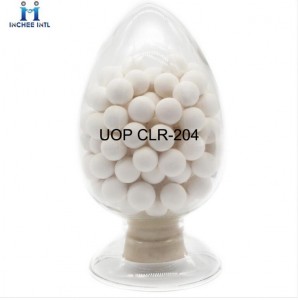
UOP CLR-204 Adsorbent
Description
UOP CLR-204 non-regenerative adsorbent is the preferred product for removing trace HCl from Olefin-containing hydrocarbon streams. CLR-204 adsorbent provides the highest chloride capacity in commercial service, while significantly minimizing green oil and organic chloride formation. Features and benefits include:
Optimized pore size distribution leading to higher capacity.
High degree of macro-porosity for rapid adsorption and short mass transfer zone.
High surface area substrate to extend bed life.
Customized adsorbent for ultra low activity in process streams. -
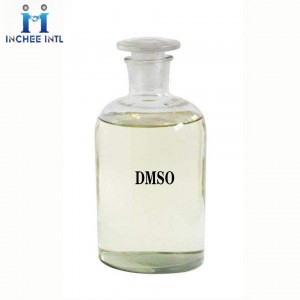
Manufacturer Good Price Dimethyl Sulfoxide (DMSO) CAS 67-68-5
Dimethyl sulfoxide (referred to as DMSO) is a sulfur-containing organic compound, the English Dimethylsulfoxide, the molecular formula is (CH3) 2SO, is a colorless, odorless and transparent liquid at room temperature, a hygroscopic flammable liquid, and has both high polarity. , high boiling point, aprotic, miscible with water, extremely low toxicity, good thermal stability, immiscible with alkanes, soluble in most organic substances such as water, ethanol, propanol, ether, benzene and chloroform, known as For the “universal solvent”.
CAS: 67-68-5
