




Manufacturer Good Price Xanthan Gum Industrial grade CAS:11138-66-2

Characteristics
1)With the increase of the shear rate, the typical rheological properties, due to the destruction of the colloidal network, reduce the viscosity and dilute the glue, but once the shear force disappears, the viscosity can be restored, so it has good pumping and processing properties. By using this property, xanthan gum is added to the liquid that needs to be thickened. The liquid is not only easy to flow in the transportation process, but also can recover to the required viscosity after it is still. Therefore, it is widely used in the beverage industry.
2)High viscosity liquid containing 2%~3% xanthan gum at low concentration, with viscosity up to 3~7Pa.s. Its high viscosity makes it have broad application prospects, but at the same time, it brings trouble to the post-processing of production. 0.1% NaCl and other univalent salts and Ca, Mg and other bivalent salts can slightly reduce the viscosity of low glue solution below 0.3%, but can increase the viscosity of glue solution with higher concentration.
3)The viscosity of heat-resistant xanthan gum has almost no change in a relatively wide temperature range (- 98~90 ℃). The viscosity of the solution did not change significantly even if it was kept at 130 ℃ for 30 min and then cooled. After several freeze-thaw cycles, the viscosity of the glue did not change. In the presence of salt, the solution has good thermal stability. If a small amount of electrolyte, such as 0.5% NaCl, is added at high temperature, the viscosity of the glue solution can be stabilized.
4)The viscosity of acid resistant and alkaline xanthan gum aqueous solution is almost independent of pH. This unique property is not possessed by other thickeners such as carboxymethyl cellulose (CMC). If the concentration of inorganic acid in the glue solution is too high, the glue solution will be unstable; Under high temperature, the hydrolysis of polysaccharide by acid will occur, which will cause the viscosity of the glue to decrease. If the content of NaOH is more than 12%, the xanthan gum will be gelled or even precipitated. If the concentration of sodium carbonate is more than 5%, the xanthan gum will also be gelled.
5)The anti enzymatic xanthan gum skeleton has a unique ability not to be hydrolyzed by enzymes due to the shielding effect of side chains.
6)Compatible xanthan gum can be mixed with most commonly used food thickener solutions, especially with alginate, starch, carrageenan and carrageenan. The viscosity of the solution increases in the form of superposition. It shows good compatibility in aqueous solutions with various salts. However, high valence metal ions and high pH will make them unstable. Adding complexing agent can prevent the occurrence of incompatibility.
7)Soluble xanthan gum is easily soluble in water and insoluble in polar solvents such as alcohol and ketone. In a very wide range of temperature, pH and salt concentration, it is easy to dissolve in water, and its aqueous solution can be prepared at room temperature. When stirring, air mixing should be minimized. If xanthan gum is mixed with some dry substances in advance, such as salt, sugar, MSG, etc., then moistened with a small amount of water, and finally mixed with water, the prepared glue solution has better performance. It can be dissolved in many organic acid solutions, and its performance is stable.
8)The bearing capacity of 1% dispersible xanthan gum solution is 5N/m2, which is an excellent suspending agent and emulsion stabilizer in food additives.
9)Water retaining xanthan gum has good water retaining and fresh-keeping effects on food.
Synonyms:GUM XANTHAN;GLUCOMANNAN MAYO;GALACTOMANNANE;XANTHANGUM,FCC;XANTHANGUM,NF;XANTHATEGUM;Xanthan Gummi;XANTHAN NF, USP
CAS: 11138-66-2
EC No.: 234-394-2
Applications of Xanthan Gum Industrial grade
1)In the drilling of petroleum industry, 0.5% xanthan gum aqueous solution can maintain the viscosity of water-based drilling fluid and control its rheological properties, so that the viscosity of high-speed rotating bits is very low, which greatly saves power consumption, while in the relatively static drilling parts, it can maintain high viscosity, which plays a role in preventing wellbore collapse and facilitating the removal of crushed stone outside the well.
2)In the food industry, it is better than the current food additives such as gelatin, CMC, seaweed gum and pectin. Adding 0.2%~1% to the juice makes the juice have good adhesion, good taste, and control the penetration and flow; As an additive of bread, can make bread stable, smooth, save time and reduce cost; The use of 0.25% in bread filling, food sandwich filling and sugar coating can increase the taste and flavor, make the product smooth, extend the shelf life, and improve the stability of the product to heating and freezing; In dairy products, adding 0.1% ~ 0.25% to ice cream can play an excellent stabilizing role; It provides good viscosity control in canned food and can replace part of starch. One portion of xanthan gum can replace 3-5 portions of starch. At the same time, xanthan gum has also been widely used in candy, condiments, frozen food and liquid food.
Specification of Xanthan Gum Industrial grade
|
Compound |
Specification |
|
Appearance |
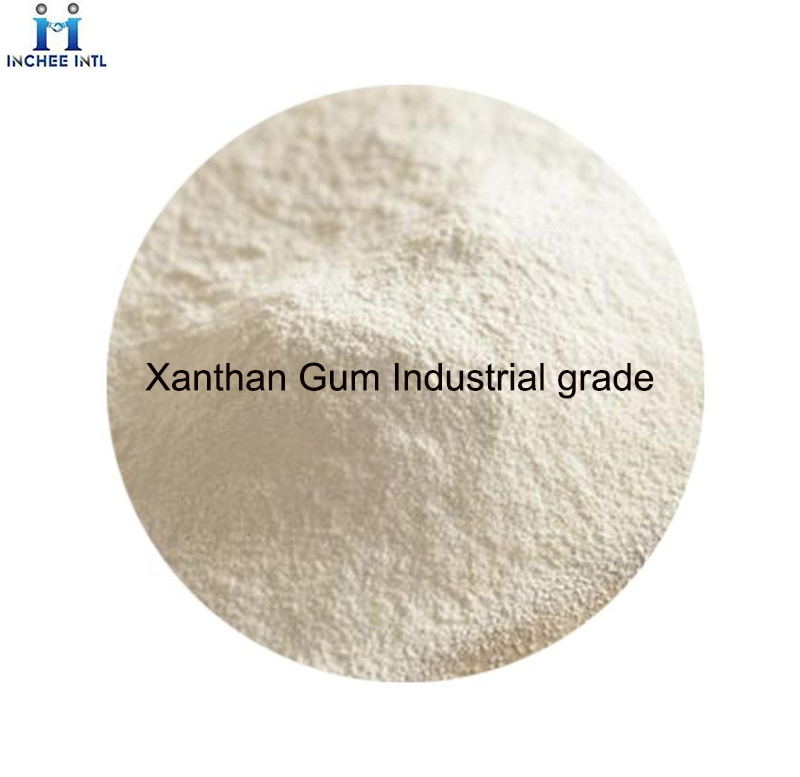
Off white or light yellow free flowing powder |
|
Viscosity |
1600 |
|
Sheer ratio |
7.8 |
|
PH(1% solution) |
5.5~8.0 |
|
Loss on drying |
≤15% |
|
Ash |
≤16% |
|
Particle Size |
200 mesh |
Packing of Xanthan Gum Industrial grade
25kg/bag
Storage: Preserve in well-closed, light-resistant, and protect from moisture.


Our Advantages
FAQ
Q1: What are the basic specifications of Xanthan Gum?
A:
- Product Name: Xanthan Gum
- CAS No.: 11138-66-2
- Appearance: Off-white / cream-colored free-flowing fine powder, odorless
- Solubility: Easily soluble in cold and hot water, forms high-viscosity stable colloid solution, insoluble in ethanol and organic solvents
- Main Grade: Food grade & Industrial grade
- Key index: Viscosity ≥1200 cP, 80/100/200 mesh fineness, good acid, alkali and salt resistance
Q2: What are other names of Xanthan Gum?
A:
Xanthan gum powder, Corn sugar gum, Xanthan polysaccharide. It is universally called Xanthan Gum in food, oil drilling and chemical industries.
Q3: What are the main applications of Xanthan Gum?
A:
1. Food Industry (Main usage): Thickener, stabilizer and suspending agent for beverages, sauces, ice cream, baked food, seasoning and dairy products. It improves texture, prevents stratification and extends shelf life.
2. Oil & Gas Drilling: Used as drilling mud thickener and suspension agent, reduces fluid loss, stabilizes well wall, widely used in oilfield exploration.
3. Daily Chemical & Cosmetics: Thickening and emulsifying agent for shampoo, body wash, lotion and facial cream, providing smooth skin feel and stable system.
4. Industrial Field: Suspension stabilizer for water-based coatings, pesticides and textile printing paste.
Q4: What is the difference between food grade and industrial grade Xanthan Gum?
A:
1. Purity & safety: Food grade adopts food fermentation raw materials, strictly controls heavy metal, bacteria and residue, meets FCC, E415 and food safety standards, edible safe.
2. Industrial grade: Focuses on viscosity and suspension performance, with slightly wider impurity index, suitable for oil drilling, coating and chemical industry, not for food use.
3. Price: Food grade is higher in cost; industrial grade is more cost-effective for large-volume industrial projects.
Q5: What are the storage requirements?
A:
1. Store in cool, dry and ventilated warehouse, avoid direct sunlight, high temperature and humid environment to prevent moisture absorption and caking.
2. Keep away from strong oxidants and corrosive chemicals, separate storage with toxic goods.
3. Sealed original package shelf life: 24 months. After opening, please seal tightly and use up as soon as possible to avoid moisture and deterioration.
Q6: What is the transportation classification?
A:
Xanthan Gum is non-dangerous goods. HS Code: 39139000. It can be transported by general cargo truck and ordinary container. No dangerous goods certificate is required. Only keep dry during transportation and avoid rain soaking.
Q7: What is the typical dosage reference?
A:
- Beverage & liquid food: 0.1%–0.3% dosage, effectively prevent particle precipitation and layering;
- Sauce & seasoning: 0.3%–0.8% to improve thickening and hanging effect;
- Oilfield drilling mud: 0.2%–0.5% for viscosity adjustment and suspension;
- Cosmetics & daily chemicals: 0.1%–0.5% for thickening and stabilization.
Q8: Can caked Xanthan Gum be used normally?
A:
Slight caking caused by moisture absorption can be crushed and dissolved normally, with no influence on viscosity and use effect. If the product appears damp deterioration, discoloration, peculiar smell or cannot be fully dissolved, it means failure and is not allowed to be used, especially for food-grade production.
Our Xanthan Gum Industrial grade video show
-

High Purity Cyclohexanone: Versatile Industrial...
-

Multi-Functional Isopropanol: Precision Industr...
-

High-Purity Butyl Acetate: Industrial Solvent
-

Industrial-Grade Styrene: Essential Resin Manuf...
-

Industrial Grade Sodium Benzoate Cosmetic Prese...
-

High-Stability Isobutanol: Polymer Processing A...