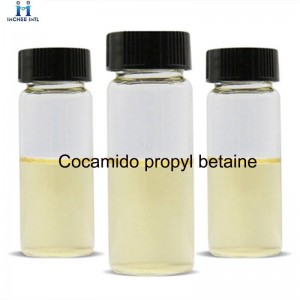

Polyoxyethylene nonylphenol ether

Synonyms
NONOXYNOL-1;NONOXYNOL-100;NONOXYNOL-120;Polyethylene Glycol Mono-4-nonylphenyl Ether n(=:)5;Polyethylene Glycol Mono-4-nonylphenyl Ether n(=:)7.5;Polyethylene Glycol Mono-4-nonylphenyl Ether n(=:)10;Polyethylene Glycol Mono-4-nonylphenyl Ether n(=:)15;Polyethylene Glycol Mono-4-nonylphenyl Ether n(=:)18
Applications of NP9
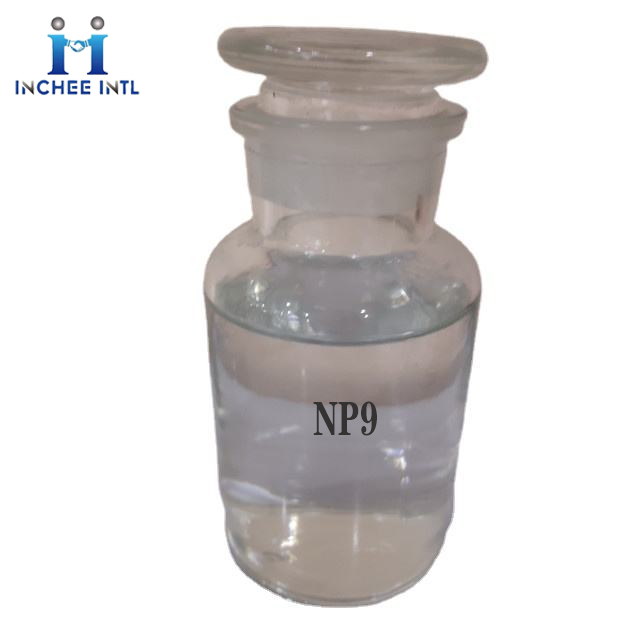
Nonylphenol polyoxyethylene (9) ether NP9,
The general formula of nonoxynols is C9H19C6H4(OCH2CH2)nOH. Each nonoxynol is characterized by the number (n) of ethylene oxide repeated in the chain. They are present in detergents, liquid soaps, emulsifiers for creams, fabric softeners, photo graphie paper additives, hair dyes, lubricating oils, spermicides and anti-infective agents. They are irritants and sensitizers.
Application:
As a non-ionic surfactant, nonylphenol polyoxyethylene ether has been widely used in detergent, textile, pesticide, coating, leather, building materials, paper and other industries.
In the aspect of synthetic detergent, it is widely used to produce compound detergent or liquid detergent and super concentrated detergent because of its good washing performance. It is added in the amount of 1% in compound detergent, 10% in liquid detergent, and 15% in ultra-concentrated detergent.
In the textile detergent, mainly used for worsted and woolen washing.
In pulp and paper, it is used as an excellent auxiliary agent for alkali extraction of resin for pulp, which can enhance alkali permeation and promote resin dispersion. As a low foaming detergent and dispersant, paper products can be smooth and uniform. In addition, nonylphenol polyoxyethylene ether is also used to remove waste newspaper ink.
In the building materials industry, used in waterborne paint, can play the role of emulsification, dispersion and wetting; Used for concrete aerating agent, can make cement mortar or concrete to form a large number of micro cells, improve its easy and water retention, improve concrete frost resistance and permeability, mainly is the potential demand for waterborne paint is larger.
Also used for petroleum demulsifier and leather processing auxiliaries, barium salt lubricating oil auxiliaries for internal combustion engines.
In the electronic industry, it is mainly used to produce the modified phenolic resin in the advanced laminate of electronic circuit.



Specification of NP9
|
ITEM |
|
|
Appearance |
Clear Liquid |
|
Color, Pt-Co |
≤30 |
|
Moisture |
≤0.5 |
|
Cloud Point |
50~60 |
|
PH |
5.0~7.0 |
|
Nonylphenol polyoxyethylene ether |
≥99 |
Packing of NP9

1000kg/ibc Nonylphenol polyoxyethylene (9) ether NP9
Storage should be at cool, dry and ventilate.

Q1: What is nonylphenol polyoxyethylene ether? What are its core properties?
Nonylphenol polyoxyethylene ether, abbreviated as NP series / NPE, is a non-ionic surfactant. It appears as colorless or pale yellow transparent viscous liquid under normal conditions, serving as a universal industrial emulsifier, penetrant and cleaning agent. It featuresstrong permeability, powerful emulsification, excellent detergency, wetting and dispersion capacity, acid and alkali resistance, and low foam adaptability. With outstanding surface activity and high cost performance, it is a widely used universal auxiliary agent in the industrial field.
Q2: What are the common models of NP series? What are their main differences?
The mainstream models on the market include NP-4, NP-6, NP-9, NP-10, NP-15 and NP-20. The number represents the addition number of ethylene oxide, which directly determines the hydrophilic and lipophilic properties of the product:
1. Low models (NP-4 / NP-6): Strong lipophilicity and excellent emulsifying ability, mainly used for solvent emulsification, oil dispersion, industrial degreasing and coating emulsification;
2. Medium models (NP-9 / NP-10): With balanced hydrophilic and lipophilic values, they deliver the best comprehensive performance in detergency, permeability and emulsification. As universal best-selling models, they are applicable to most scenarios such as cleaning, printing and dyeing, daily chemical industry and pesticides;
3. High models (NP-15 / NP-20): Featuring strong hydrophilicity and excellent water solubility, they show outstanding dispersion and solubilization effects, and are mostly used for dispersion, solubilization, foam stabilization and water treatment auxiliaries in aqueous systems.
Q3: Is nonylphenol polyoxyethylene ether ionic or non-ionic? What are its advantages?
It belongs to non-ionic surfactant. Different from anionic and cationic surfactants, it is not affected by water hardness and acid-base environment, and maintains stable performance in hard water, weak acid and weak alkali systems. It can be compounded with various anionic, cationic and non-ionic auxiliaries with excellent compatibility. Integrating penetration, emulsification, cleaning and dispersion functions, it is far more versatile than single-functional auxiliaries.
Q4: What are the core industrial applications of nonylphenol polyoxyethylene ether?
1. Industrial cleaning and degreasing: Used in metal degreasers, oil stain cleaners and heavy oil degreasing agents to rapidly emulsify and decompose industrial heavy oil, engine oil, butter and dust oil stains with strong permeability and thorough cleaning effect;
2. Textile printing and dyeing industry: Used as penetrant, leveling agent, degreaser and wetting agent to improve the uniform penetration of dyes, prevent dyeing mottling, and remove natural grease and impurities from textile fibers;
3. Pesticide auxiliaries: Served as pesticide emulsifier and spreader to improve the adhesion, penetration and spreading of liquid medicine on crop surfaces, enhance drug efficacy and reduce liquid loss;
4. Coatings, inks and chemical industry: Applied to the emulsification and dispersion of coatings, inks and resins to prevent pigment precipitation and agglomeration, and improve the stability and uniformity of the system;
5. Daily chemical washing compounding: Compatible with dish soap, laundry detergent and industrial cleaners to improve detergency, emulsification and wetting performance;
6. Leather and paper industry: Used as auxiliaries for leather degreasing and paper wetting & dispersion to optimize production process effects.
Q5: Why is NP-10 the most popular universal model?
NP-10 has a moderate hydrophilic-lipophilic balance value with balanced and comprehensive performance. It integrates strong detergency, high permeability, excellent emulsification and good water solubility, and is applicable to most scenarios including cleaning, printing and dyeing, pesticides, chemical industry and daily chemicals. With the widest application range and high cost performance, it is the preferred universal model to replace various single-functional auxiliaries in industrial production.
Q6: Can nonylphenol polyoxyethylene ether be used in stock solution? What are the conventional dilution ratios?
Direct use of stock solution is not recommended. It shall be diluted with water or solvent according to actual scenarios. The conventional reference ratios are as follows:
1. Industrial heavy oil stain cleaning: 3%-8% compounded with caustic soda and other auxiliaries for optimal heavy oil decomposition effect;
2. Textile penetration and leveling: 0.5%-2% diluted with warm water for stable penetration and dye leveling performance;
3. Pesticide and coating emulsification: Adjust appropriately according to system requirements; a conventional dosage of 1%-3% can achieve excellent emulsification and dispersion effects;
4. Light stain cleaning: 1%-2% to meet daily degreasing and decontamination requirements.
Q7: Can it be mixed and compounded with other auxiliaries?
Yes. NP series non-ionic auxiliaries possess extremely strong compatibility. They can be freely compounded with conventional industrial auxiliaries such as anionic, non-ionic and partial cationic surfactants, alkalis, solvents and corrosion inhibitors. The compound formula can synergistically improve detergency, emulsification and penetration without antagonistic reactions, serving as the core raw material for compound cleaners.