



-

Manufacturer Good Price Solvent 200 CAS:64742-94-5
Solvent 200 is a refined hydrocarbon solvent derived from petroleum distillation, consisting primarily of aliphatic and aromatic compounds. It is widely used as an industrial solvent in paints, coatings, adhesives, and rubber manufacturing due to its effective solvency and balanced evaporation rate. With a medium boiling range, it ensures optimal drying performance in formulations.
-

Manufacturer Good Price Solvent 150 CAS:64742-94-5
Solvent 150 (CAS: 64742-94-5) is a high-purity aliphatic hydrocarbon solvent with excellent solvency and low aromatic content. It is widely used in industrial applications such as paints, coatings, adhesives, and cleaning formulations due to its strong dissolving power and low volatility.
-

HB-421
Appreance: yellow to brown transparent liquid
Active ingredients: 95% min
Specific gravity(20℃): 1.0-1.05
PH: 9
-

Isopropyl Ethyl Thionocarbamate CAS: 141-98-0
Appreance: Amber to dun liquid
Purity: 95% Min
Specific gravity(20℃):0.968-1.04
Isopropyl alcohol: 2.0 Max
Thiourea: 0.5 Max
-

Sodium Diisobutyl (Dibutyl) Dithiophosphate
Molecular forula:((CH₃)₂CHCH₂O)₂PSSNa[(CH₃(CH₂)₃0)₂PSSNa]
-

Ammonium Dibutyl Dithiphosphate
Molecular formula: (C4H9O) 2PSS · NH4
-

ABB Combustion Instrument
A flame detector is a sensor designed to detect the presence of a flame, measure its basic parameters and release an output signal usable for safety shutdown systems or interfaced control systems.
In short, Optical instrument that senses:
Flame “ON”
Flame “OFF”
-

Sodium Ethyl Xanthate
Application:Sodium Ethyl Xanthate is the shortest carbon chain of the available xanthates,which is widely used asflotation reagent and improve the grade and recovery.This mining flotation reagent is a low-cost but a high selective collector of available.xanthates,and it i smost useful in the flotation of sulphide ore and multi-metallic ore for maximum selectivity.Feeding method:10-20% solutionUsual dosage:10-100g/tonStorage&Handling:Storage:Store solid xanthates in original properly sealed containers under cool dry conditions awayfrom sources of ignition.Handling:Wear protective equipment.Keep away from sources of ignition.Use non sparking tools. Equipment should be earthed to avoid static discharge.All electronice quipment should be adjusted for work in explosive environment. -

Sodium Isopropyl Xanthate
Application:Sodium Isopropyl Xanthate is widely used as flotation reagents in the mining industry for multi-metal sulphide ore for good compromise between collecting power and selectivity.It can float all sulfides but is not recommended for scavenging or high grade sulfides because of the larger retention time required to get desired recovery levels.It is most commonly used in zinc flotation circuits because it is selective against iron sulfides at high pH (10 Min) while aggressively collecting the copper-activated zinc.Ithas also been used to float pyrite and pyrrhotite if the iron sulfide grade is fairly low and the pH is low. It is recommended for copper-zinc ores,lead-zinc ores, copper-lead-zinc ores, low grade copper ores, and low grade refractory gold ores,but not recommended for oxidized or tarnished ores due to its lack of pulling power. It is alsoused as vulcanization accelerator for rubber industry as well.Feeding method: 10-20% solutionUsual dosage: 10-100g/tonStorage&Handling:Storage:Store solid xanthates in original properly sealed containers under cool dry conditions away from sources of ignition.Handling:Wear protective equipment. Keep away from sources of ignition. Use non sparking tools. Equipment should be earthed to avoid static discharge. All electronicequipment should be adjusted for work in explosive environment. -
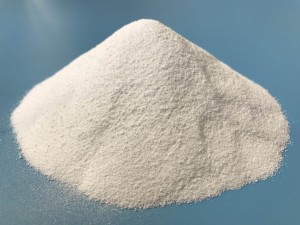
Manufacturer Good Price Sodium Tripolyphosphate CAS:7758-29-4
Sodium tripolyphosphate also known as pentasodium phosphate, sodium pyrometaphosphate, STPP, pentasodium tripolyphosphate. White powdery crystal with good fluidity, relative molecular weight of 367.Chemicalbook86, melting point of 622 ℃, easily soluble in water, and its aqueous solution is alkaline. Commonly used in food as a water retention agent, quality improvement agent, pH regulator, and metal chelating agent.
Sodium tripolyphosphate aqueous solution is weakly alkaline (the pH value of a 1% aqueous solution is about 9.7), and it forms a suspension (similar to an emulsion) in water with a pH range of 4.3-14, which is called dispersion. Sodium tripolyphosphate can also improve the solubility of liquid and solid chemical particles in liquid (such as water) media, making the solution completely transparent and resembling a real solution. This is known as solubilization. Due to its unique properties, sodium tripolyphosphate has become an important and ideal raw material in laundry detergent.
