



-

Manufacturer Good Price P-TOLUENESULFONYLISOCYANATE (PTSI) CAS 4083-64-1
P-TOLUENESULFONYLISOCYANATE (PTSI) is a single functional isocyanate. P-TOLUENESULFONYLISOCYANATE (PTSI) has high activity and can react with conventional diisocyanates, such as TDI and HDI, with water in polyols and solvents. The resulting carbamate does not increase the viscosity of the system. The disadvantage is that the toxicity of oxazolidine and other dehydrants is large; P-TOLUENESULFONYLISOCYANATE (PTSI) reacts with water to produce carbon dioxide and toluenesulfamide, so P-TOLUENESULFONYLISOCYANATE (PTSI) cannot be used directly in paint formulations and is generally used for pre-dehydration. To remove 1g of water in the solvent, about 12g of PTSI is theoretically required, but the actual amount should be higher than this.
CAS: 4083-64-1
-
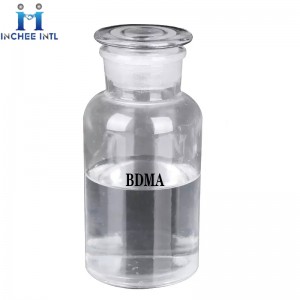
Manufacturer Good Price Dimethylbenzylamine (BDMA) CAS:103-83-3
Dimethylbenzylamine (BDMA) is a colorless to light yellow liquid with an aromatic odor. Slightly less dense than water and slightly soluble in water. Flash point approximately 140°F. Corrosive to skin, eyes and mucous membranes. Slightly toxic by ingestion, skin absorption and inhalation. Used in the manufacture of adhesives and other chemicals.
CAS:103-83-3
-
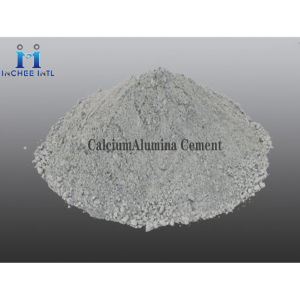
Manufacturer Good Price CalciumAlumina Cement CAS:65997-16-2
CalciumAlumina Cement is cement with calcium calcium or calcium aluminum as its main mineral component. It is made of natural aluminum or industrial alumina and calcium carbonate (limestone) according to a certain proportion, which is made by burning or electric melt.
Ingredients and categories: CalciumAlumina Cement can be divided into ordinary aluminum calcium calcium cement (al2O3 53-72%, CAO 21-35%) and pure aluminum calcium cement (al2O3 72-82%, CAO 19-23 %) Two categories. Ordinary aluminum cement cement can be divided into low -iron type (FE2O3 <2%) and high -speed rail type (Fe2O37-16%). Low -rail -type aluminum -type calcium cement can be divided into alum soil cement (Al2O353 ~ 56 %, CAO 33-35%), aluminum -60 cement (al2O359%to 61%, CAO 27-31%), and low -calcium aluminum acid cement (Al2O3 65-70%, CAO 21 to 24%). Pure aluminum calcium cement can be divided into two types: Al2O3 72-78%) and ultra -high aluminum type (Al2O3 78-85%). In addition, there are fast and hard early strong aluminum calcium cement.CAS: 65997-16-2
-
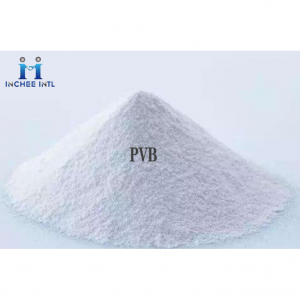
Manufacturer Good Price PVB( Polyvinyl Butyral Resin) CAS:63148-65-2
Polyvinyl Butyral Resin(PVB) is a product that is contracted by polyvinyl alcohol and butadhyde under acid catalytic. Because PVB molecules contain long branches, they have good softness, low glass temperature, high stretching strength and anti -impact strength. PVB has excellent transparency, good solubility, and good light resistance, water resistance, heat resistance, cold resistance, and film formation. It contains functional groups that can perform various reactions such as acetylene -based saponification reactions, vinegarization of hydroxyl, and sulfonic acidization. It has high adhesion with glass, metal (especially aluminum) and other materials. Therefore, it has been widely used in the fields of manufacturing safety glass, adhesives, ceramic flower paper, aluminum foil paper, electrical materials, glass reinforcement products, fabric treatment agents, etc., and become an indispensable synthetic resin material.
PVB( Polyvinyl Butyral Resin) CAS:63148-65-2
Series:PVB( Polyvinyl Butyral Resin) 1A/PVB( Polyvinyl Butyral Resin) 3A/PVB( Polyvinyl Butyral Resin) 6ACAS: 63148-65-2
-
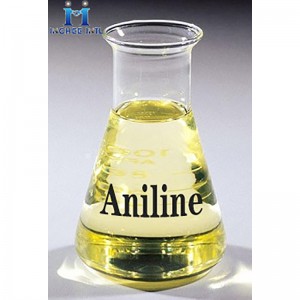
Manufacturer Good Price Aniline CAS:62-53-3
Aniline is the simplest aromatic amine, benzene molecule in a hydrogen atom for the amino group of compounds generated, colorless oil flammable liquid, strong smell. The melting point is -6.3℃, the boiling point is 184℃, the relative density is 1.0217(20/4℃), the refractive index is 1.5863, the flash point (open cup) is 70℃, the spontaneous combustion point is 770℃, the decomposition is heated to 370℃, slightly soluble in water, easily soluble in ethanol, ether, chloroform and other organic solvents. Turns brown Chemicalbook color when exposed to air or sunlight. Available steam distillation, distillation to add a small amount of zinc powder to prevent oxidation. 10 ~ 15ppm NaBH4 can be added to the purified aniline to prevent oxidation deterioration. Aniline solution is basic, and acid is easy to form salt. The hydrogen atom on its amino group can be replaced by a hydrocarbon or acyl group to form secondary or tertiary anilines and acyl anilines. When the substitution reaction is carried out, the adjacent and para-substituted products are mainly formed. Reaction with nitrite yields diazo salts from which a series of benzene derivatives and azo compounds can be made.
CAS: 62-53-3
-
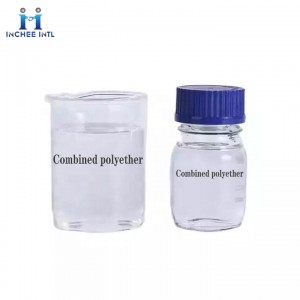
Manufacturer Good Price Combined polyether CAS:9082-00-2
Combined polyether is one of the main raw materials of polyurethane hard bubbles, also known as white material, and is called black white material with polymer MDI. It is composed of a variety of components such as polyether, uniform foaming agent, linked agent, catalyst, foaming agent and other components. It is suitable for various occasions that need to keep insulation and preservation of cold insulation and cold.
Combined polyether CAS:9082-00-2
Series:Combined polyether 109C/Combined polyether 3126/Combined polyether 8079CAS: 9082-00-2
