




In the broad family of chemical products, methyl acetate may not be as famous as its “cousin” ethyl acetate. Yet as a basic organic solvent, it has long played a quiet but important role in coatings, inks, leather manufacturing and other sectors. Recently, following the breakthrough of a world-first technology, methyl acetate has begun to appear frequently in industry headlines, and its green, eco-friendly downstream application prospects are being re-evaluated.
Product Profile: What is Methyl Acetate?
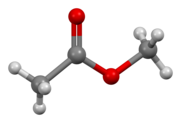
Methyl acetate, also known as acetic acid methyl ester, is an organic compound with the molecular formula C₃H₆O₂.
At room temperature and pressure, it is a colorless, transparent liquid with a mild aromatic odor and high volatility.
Physicochemical Properties
Methyl acetate has a low boiling point of only 57.8 °C, which makes it very easy to recover and purify by distillation in industrial production.
It is slightly soluble in water, but miscible with most organic solvents (such as ethanol and diethyl ether) in all proportions.
Molecular Structure of Methyl Acetate
Main Applications
As a high-performance solvent, methyl acetate has a wide range of uses:
Coatings & Inks Industry: An important solvent for nitrocellulose, resins, oils, etc., widely used in the production of thinners, inks and paints.
Synthetic Leather & Textiles: Used as a solvent to assist material forming and processing in artificial leather production and fabric finishing.
Flavors & Reagents: In fine chemicals, high-purity methyl acetate is used in flavor synthesis and as a laboratory chemical reagent.
Latest News: Breaking Monopolies, Methyl Acetate Becomes a Hot Commodity
For a long time, methyl acetate has been treated as a conventional solvent in the chemical industry chain, with relatively low added value. However, news of a downstream technology breakthrough has completely changed this situation.
According to the latest 2026 industry reports, the world’s first pilot plant for producing methyl methacrylate (MMA) from methyl acetate and formaldehyde — independently developed by a Beijing-based tech company — has been successfully commissioned.
Technical Highlights: An Original C1-Based New Route
This technology has shaken the industry because it creates a brand-new production route.
Traditional MMA technologies (e.g., acetone cyanohydrin process, isobutylene process) mainly rely on petrochemical feedstocks, and the most economically competitive Alpha process has long been monopolized overseas.
The company’s new process uses methyl acetate and formaldehyde as raw materials to synthesize high-value-added MMA.
Huge Economic Benefits
Methyl acetate acts as a core raw material in this reaction.
The success of this technology not only gives China a globally original MMA production technology, but also extends the methanol industrial chain and opens up massive new demand for upstream methanol and methyl acetate.
It is reported that the separated and refined product from the pilot plant already meets China’s national standard premium grade. A feasibility study for a 100 000 t/a MMA project also shows strong overall profitability.
In short, methyl acetate is no longer just a solvent — it has become a key feedstock for high-end materials such as organic glass and advanced plastics.
Industry Trends: Balancing Market Growth and Safety Regulation
Driven by the technological breakthrough, the methyl acetate market is entering a new growth cycle. At the same time, supervision of production safety and occupational health is becoming stricter.
1. Expanding Market Size
Market research institutions forecast that the global methyl acetate market will grow at a compound annual growth rate of 4.3% from 2024 to 2029, with significant incremental value. Growth is driven by two main factors:
Stable traditional demand: Strong ongoing demand for methyl acetate as a basic solvent in paints, coatings and packaging.
Emerging applications: Besides the new MMA route, methyl acetate is increasingly used as a flavoring agent in food and an extractant in pharmaceuticals.
2. Market Price Dynamics
Recently, methyl acetate supply has been relatively tight.
According to February 2026 platform data:
● Main negotiated price for crude methyl acetate in East China: 2900–3000 RMB/ton
● Price for refined methyl acetate: around 3450–3500 RMB/ton
Prices are firm and trending slightly upward. Major producers in Inner Mongolia, Shaanxi and other regions are running steadily with stable quotations.
|
Date |
Price Range in East China Market |
Main Transaction Price |
Price Change |
Remarks |
|
2026-02-01 |
3400-3500 |
3450 |
— |
Stable market before the Spring Festival |
|
2026-02-04 |
3400-3500 |
3450 |
0 |
First trading day after the holiday |
|
2026-02-07 |
3100-3200 |
3150 |
-300 |
Sharp price correction |
|
2026-02-10 |
3100-3240 |
3134 |
-16 |
Market in wait-and-see mood |
|
2026-02-20 |
3100-3100 |
3100 |
-34 |
Stable operation |
|
2026-02-23 |
3100-3100 |
3100 |
0 |
Thin trading |
|
2026-02-24 |
3100-3100 |
3100 |
0 |
Weak demand |
|
2026-02-27 |
3350-3450 |
3400 |
+300 |
Price rebound today |
3. Safety and Environmental Challenges
As applications expand, the safety and health hazards of methyl acetate cannot be overlooked.
● Hazard properties: Highly flammable; vapor can form explosive mixtures with air. It has anesthetic and irritant effects, and metabolizes to methanol in the human body, which may damage the optic nerve.
● Regulatory trend: Since 2024, local CDCs (e.g., Fuzhou CDC) have strengthened workplace poisoning prevention, requiring closed operation and local ventilation in textiles, leather and other uses.
Tighter environmental rules will likely raise production and storage costs, pushing the industry toward larger-scale, more intensive development.
Conclusion
From an ordinary industrial solvent to a core raw material breaking “bottleneck” technologies, the transformation of methyl acetate reflects China’s chemical industry shifting from scale expansion to technological innovation.
In future market competition, enterprises that can better apply methyl acetate-based new processes while strictly controlling production safety will take the lead in this wave of green chemical development.
Post time: Mar-02-2026